
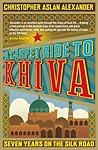
 A Carpet Ride to Khiva: Seven Years on the Silk Road by Chris Aslan
My rating: 5 of 5 stars
Publisher Site – ICON Books
“Travel-centric memoir” is how I’d classify this book, but it’s one of those books that isn’t easily categorized. The author cleverly interweaves explorations of Uzbek history and culture with his own story of living in the Uzbek city of Khiva for seven years as an NGO worker and traditional crafts entrepreneur. The side voyages into history and culture not only support the readers’ contextual understanding of the author’s story but also make for a fascinating journey of understanding of the locale. Uzbekistan has had many lives, from beating heart of the Silk Road to forgotten backwater of the Soviet Union, and these many lives have shaped what Uzbekistan is, and what it’s becoming.
I should point out that Uzbekistan has apparently made a hard shift since the days described in this book (late 90’s early 2000’s, i.e. fairly early in the wake of independence from the Soviet Union.) I mention this to avoid discouraging travelers through discussion of the author’s experiences. [I, myself, am planning a trip in the near future.] I’m sure that Uzbekistan continues to have deep-seated problems, but it seems to be making great efforts to be tourist-friendly these days. Which is not to say that the individuals were ever unfriendly to travelers. The author describes an Uzbek people who are warm-hearted, welcoming, and helpful. But when the author was there it was also on the list of the biggest human rights violators, corruption was ubiquitous, and tourism was almost non-existent. In fact, the penultimate chapter of the book describes the author’s experience of a visa denied, ping-ponged deportations, and a life sharply diverted by corruption.
The final chapter is intensely compelling and describes the author’s (late 2000’s) visit to Afghanistan to help apply the lessons he learned in Uzbekistan to building a rug weaving operation in that war-torn country (allowing women to make some money, an activity disallowed by the Taliban before and since.)
This is a fascinating book, and I’d highly recommend it for travelers and those interested this lesser-known part of the world. Even the descriptions of silk production, rug weaving, and natural dyes (topics that I expected wouldn’t resonate with me) were interesting and engaging.
View all my reviews


 Tiger Riding for Beginners