BOOK: “Zatanna” by Paul Dini, et. al.

ZatannaZatanna by Paul Dini
My rating: 4 of 5 stars

Publisher Site — DC Comics

Zatanna is a magician, both in the sense of being a professional stage illusionist and in the sense of making real magic offstage. The stories contained herein are about her heroic use of the latter magic, though they are often set to the backdrop of her professional life, i.e. clubs and other entertainment venues. Daughter to a deceased legend of stage prestidigitation, The Great Zatara, Zatanna makes magic through verbal spells.
 
This sixteen-issue run consists mostly of standalone stories. There are a couple story arcs that span three or four issues, but for the most part the stories are wrapped up within an issue. Some of these stories dedicate panels to what’s happening with Zatanna’s long-running nemesis, Brother Night, even when the main story is unrelated to him (presumably so as to keep the readers ready to receive some larger arc.)

The stories are good, light-hearted escapism — even – perhaps – when they don’t mean to be. By that I mean that the subject matter is often dark, dealing in demons and nightmares personified, but Zatanna is usually so overpowered compared to her enemies and the book attempts to maintain a quippy comedic effect, and so the reader never feels their heroine is at risk of true danger. That said, the authors do put Zatanna in dire situations, and so the stories often do hook one into a state of wonder about how she will escape some awful fate (even while not doubting for an instant that she will.) Zatanna does have weaknesses and there is some attempt to suggest that magic has risks and consequences (otherwise, the stories would devolve into lukewarm absurdism rather quickly.)

I enjoyed this run. The art is crisp and imaginative, and the stories are often clever — if rarely taut.

View all my reviews

BOOKS: “Nightwing, Vol. 1: Leaping into the Light” by Tom Taylor

Nightwing, Vol. 1: Leaping into the LightNightwing, Vol. 1: Leaping into the Light by Tom Taylor
My rating: 5 of 5 stars

Publisher Site – DC Comics

As in a lot of the Batman stories, in this volume, Nightwing (Dick Grayson) is fighting a two-front war. On the one hand, there is a mysterious central villain du jour, Heartless — an augmented masked criminal who is killing in impoverished neighborhoods by (literally) stealing his victims’ hearts. Then, on the other hand, there is the usual systematic corruption and organized crime of his chosen city, Blüdhaven. These two fights bump into each other here and there but are largely independent of one other (at least as far as one can tell in this, the first, volume of a run.) Barbara Gordon and Tim Drake / Robin participate in the story, but other than that the only hero appearances are cameos.

I enjoyed the pacing and emotional arc of this story. My reading pleasure surprises even me because I think I would ordinarily feel the book had a poor resolution to hook ratio. (i.e. I would feel that not enough was resolved to make this feel like as satisfactory standalone story.) However, there was a resolution that offered satisfaction, but it was just not what I (or -probably- the typical reader) would think of as a normal comic book resolution. (i.e. It was not a resolution achieved by kicking and punching, but rather by soul-searching.)

At any rate, I’d highly recommend this book for comic book readers.

View all my reviews

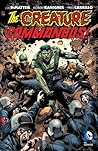
BOOKS: “The Creature Commandos” by J.M. DeMatteis, et. al.

The Creature CommandosThe Creature Commandos by J.M. DeMatteis
My rating: 4 of 5 stars

Publisher Site – DC

Having recently heard about the impending animated series being made under James Gunn’s aegis, I read this book to learn who, exactly, were the “Creature Commandos.” This volume collects eighteen issues of “Weird War Tales” from the 1980’s and is where this superhero team got its start. It’s not a complicated premise: a team consisting of characters based on classic horror figures is assembled to carry out challenging missions on behalf of Allied powers during World War II. It should be pointed out that these aren’t the original horror characters, but rather were mostly made in the lab using “science.” The core team of Lucky Taylor (Frankenstein’s Monster-like,) Sgt. Velcro (Dracula-like,) and Griffith (a Werewolf) were all produced in such a way by “Project M.” A fourth member of the team, Dr. Medusa (Myrra Rhodes,) got her powers in a laboratory accident (yes, this wasn’t exactly sophisticated storytelling.) An occasional fifth member J.A.K.E., the robotic infantryman, appears in only a few issues.

This collection is definitely from another era. It is written with an audience of children in mind. It’s not just the “science” that lacks cleverness, but also much of the dialogue and some of the story elements. It is also different in that there is no overarching story continuity. Each episode is standalone. This is probably in part because the Creature Commandos didn’t have their own title at this point and were appearing in “Weird War Tales.” In early issues there is a fair amount of repetitive exposition to catch new readers up, but that became less prominent as the series progressed.

Having said all that, many of the stories are compelling and — despite the campiness — the authors do succeed in making the reader sympathize with the core group and their plight as humans turned monster. My only complaint about character development would be with respect to the team’s leader, Lt. Shrieve. I’m sure they were aiming for “gruff, war-hardened, but fundamentally decent,” but through the first three-fourths of these comics Shrieve is completely detestable and has no redeeming value whatsoever. The authors did start to make course corrections toward the end, planting seeds to make Shrieve less loathsome, to make him someone that you can understand (despite his rough edges) why his team might save him instead of fragging him. I suspect that they wanted to make the most physiologically human character the least humane of the characters, but they took it too far.

All and all, I found this collection enjoyable to read — despite being juvenile and camp — and am looking forward to what they will do in the animated TV series. [Note: It is a different slate of characters and is otherwise updated to appeal to an adult audience, but – I suspect – draws from the original source material in some ways.]

View all my reviews

BOOKS: “Sweet Tooth, Vol. 5: Unnatural Habitats” by Jeff Lemire

Sweet Tooth, Vol. 5: Unnatural HabitatsSweet Tooth, Vol. 5: Unnatural Habitats by Jeff Lemire
My rating: 5 of 5 stars

Publisher Site

This volume carries out two story arcs. The first is a self-contained flashback that offers the reader new insight into the central strangeness of this series (i.e. a plague on humanity and the development of various human-animal hybrids.) The second is the conclusion of the Volume 4 storyline in which Gus, Jepperd, and their human and hybrid traveling companions find an apparent safe haven that splits the group between those who wish to stay and those who want to continue on their original path to Alaska.

Both arcs are visceral and engaging. This is a very satisfying volume. It’s a pity that publishers are so constrained by page count because Volumes 4 and 5 combined together would be a phenomenal book (whereas Vol. 4 – as it stands – is kind of a lackluster read.) Anyone whose been to a movie in India and is familiar with the random intermission placed right in the middle of the runtime (regardless of what is going on in the story at the time) can grasp what I’m saying. It’s a little mean to break the momentum of a good story in progress. However, this volume offers all the satisfaction of resolution and conclusion — while leaving open clear routes for advancing the story overall.

I’d highly recommend this volume and that one read it closely back-to-back with Volume 4.

View all my reviews

BOOKS: “Sweet Tooth, Vol. 4: Endangered Species” by Jeff Lemire

Sweet Tooth, Vol. 4: Endangered SpeciesSweet Tooth, Vol. 4: Endangered Species by Jeff Lemire
My rating: 4 of 5 stars

Publisher Site: DC Vertigo

Heading north to solve the mystery of Gus (the titular deer-boy “hybrid” that some call Sweet Tooth, the first-known hybrid child and one who Dr. Singh believes may be integral to understanding the disease that swept through humanity at the same time hybrids started being born,) the ragtag group of hybrid kids and human chaperones runs into its first snag. The group stumbles upon a place that may offer the security and resources needed to live comfortably (i.e. for a post mega-pandemic wasteland.) This threatens to split up the group, most of which longs for the safety and sustainability that this place appears to provide. But the reader is presented crumbs of unease about this place. It feels like this sanctuary might harbor a dirty secret.

I continue to enjoy this series. I didn’t find the arc as satisfying as some of the volumes. It is a thriller, and we are given crucial new information by the book’s end, but the central question of the story arc remains unanswered. That said, the story does a fantastic job of building up internal tension as well as creating unease in the reader. If you’ve enjoyed the story so far, you will want to continue onward.

View all my reviews

BOOKS: “The Sandman, Vol. 3: Dream Country” by Neil Gaiman

The Sandman, Vol. 3: Dream CountryThe Sandman, Vol. 3: Dream Country by Neil Gaiman
My rating: 5 of 5 stars

DC Site

If you love a good story, you really can’t go wrong with Gaiman. This volume consists of four standalone pieces of short fiction set in the Sandman universe.

“Calliope,” like Greek Mythology, envisions an anthropomorphized muse, but takes the idea into a dark and modern twist as said muse is held captive and violated.

“A Dream of a Thousand Cats” imagines dreams do shape the real world and asks what if animals dreamt as big as humans.

“A Midsummer Night’s Dream” is built around the premise that Shakespeare had a patron, none other than Morpheus, a.k.a. Dream, himself.

“Facade” is about a supernatural woman who can only go out in public by taking risky measures to look “normal,” and explores her lonely existence.

All of these stories are clever and compelling, and I’d highly recommend this collection for readers of speculative fiction.

View all my reviews

BOOKS: “DC vs. Vampires, Vol. 1” by James Tynion IV & Matthew Rosenberg

DC vs. Vampires, Vol. 1DC vs. Vampires, Vol. 1 by James Tynion IV
My rating: 4 of 5 stars

Publisher’s Site

In this opening volume in a series that pits a set of the DC pantheon of superheroes against a shadowy vampire cabal, we learn that the vampires are preparing for attack and that they’ve infiltrated all levels of society to degrees unknown — even the Justice League. This volume focuses heavily on the extended “Bat-Family” along with Oliver Queen’s smaller Green Arrow team, but includes many more superpowered characters in varied roles. Though it also ignores some of the most powerful characters, a big risk for such a huge ensemble cast. (One wants to save some big guns, but it begs the question of whether Superman is fiddling while the world burns.)

I like how tension was built in this story, and how information is revealed to the reader, allowing one to be gripped by questions of how the characters will learn what one already knows and with what consequences. The volume ends with a big reveal, though not with any kind of resolution. So, it’s not a standalone story in my view.

I found the volume engaging, but feel it suffers from the unavoidable problems of having too many characters, particularly characters of the god-tier variety.

View all my reviews

BOOKS: “American Vampire, Vol. 3” by Scott Snyder

American Vampire, Vol. 3American Vampire, Vol. 3 by Scott Snyder
My rating: 5 of 5 stars

Publisher site

The third volume of the American Vampire series advances the story into the 1940’s — World War II to be precise. The book contains two distinct storylines, both involving missions behind enemy lines. The first, “Strange Frontier,” is set in the Pacific theater and centers on the character of Henry Preston (the non-vampire husband of benevolent American Vampire, Pearl Jones.) In it, Preston is assigned to an elite fighting squad dispatched to investigate an island that turns out to be infested with a new strain of vampire.

The second story, “Survival of the Fittest,” takes vampiric vampire-hunter Felicia Book as its lead as she is dispatched (in partnership with agent “Cash” McCogan) to Nazi-occupied Romania to investigate claims of a “mad” scientist’s vampire-related research, only to find herself in a completely unexpected and daunting scenario.

I’m enjoying this series. The stories are satisfying and well-crafted, and the books somehow manage to not be just another set of vampire stories. Moving through time allows the stories to be self-contained while making it possible to continue with ever fresh material. (A tactic that works owing to the long lifespans of vampires.) The books also use genre mixing brilliantly, be it detective noir or — in the case of this volume — the war story. Snyder has breathed new life into the vampire story, and I’d highly recommend this series for comic book readers.

View all my reviews

BOOKS: “Constantine, Vol. 1: The Spark and the Flame” by Ray Fawkes & Jeff Lemire

Constantine, Vol. 1: The Spark and the FlameConstantine, Vol. 1: The Spark and the Flame by Ray Fawkes
My rating: 4 of 5 stars

Amazon.in Page

This is your basic “race to acquire the components of a multi-part MacGuffin” story line. There is a magic compass that John Constantine is eager to keep out of the hands of a shadowy organization of powerful magicians. Why do we care? First of all, because this is a vaguely but extremely powerful artifact that can rain utter destruction on the world in some ill-defined way. Secondly, because Constantine is just such an intriguing character. Mostly the latter, because the former is ill-defined and doesn’t merit much emotional traction.

That’s mostly what the story is about, but there are various seemingly haphazard story elements (probably too many for the first volume in a series.) This being marketed as a “Volume One” is where much of the book’s problems lie. We pick up pretty much in medias res and when an event occurs that we’re supposed to care about enough to want to see a resolution late in the volume, it’s really hard to care about because it’s been raced through. If you are picking this up after reading the previous series, it’s undoubtedly much more satisfying as a story. Picking up the story with this “Volume 1” is a bit chaotic and lacking in emotional resonance.

That said, John Constantine is one of the most interesting characters in comics and he’s written and drawn well in this book. (Not to mention supporting characters like Papa Midnight.) The story is fast-paced and the broad brushstrokes of it are comprehensible.

If you’ve read the previous Hellblazer / Constantine works, you’ll probably enjoy this volume. Taking it on as a standalone may leave one a bit befuddled.

View all my reviews

BOOKS: “Batwing, Vol. 1: The Lost Kingdom” by Judd Winick

Batwing, Vol. 1: The Lost KingdomBatwing, Vol. 1: The Lost Kingdom by Judd Winick
My rating: 4 of 5 stars

Amazon.in page

This New 52 spinoff takes the Batman mythos out of Gotham and into the Democratic Republic of Congo. Batman, himself, plays largely a supporting role as mentor and equipment provider to David Zavimbe, a.k.a. Batwing. The book is careful to avoid having Batman play the role of rescuer, but instead, when Batwing and Batman fight together they do so largely as peers.

I’ve got to say that the name had me worried. It’s like a mashup of “Batman” and “Nightwing” and seems lazy and uninspired in a way that I feared might infect the comic. However, character building is a strength in this volume. David Zavimbe is a former child soldier in the Congo, particularly gifted in killing — though tormented by it, torment that reflects itself in PTSD.

While Batwing’s abilities paired with Bruce Wayne’s technology makes the Congolese superhero a force to be reckoned with, Batwing meets his match in a mysterious villain who calls himself “Massacre.” This six-issue volume focuses on the on-going battle between Batwing and Massacre, as the former tries to disrupt the latter’s killing spree.

This arc is stimulating in that it deals heavily in the complex realities of war-torn Africa. There is the issue of redemption, and whether it is even possible for someone who has been a cold-blooded killer. But the story also generates ambiguity about who is right, and even whether “right” is meaningful in a context where everyone has blood on his hands.

I enjoyed reading this book and would recommend it for all comic book readers, especially those who like either Batman, Black Panther, or both.

View all my reviews