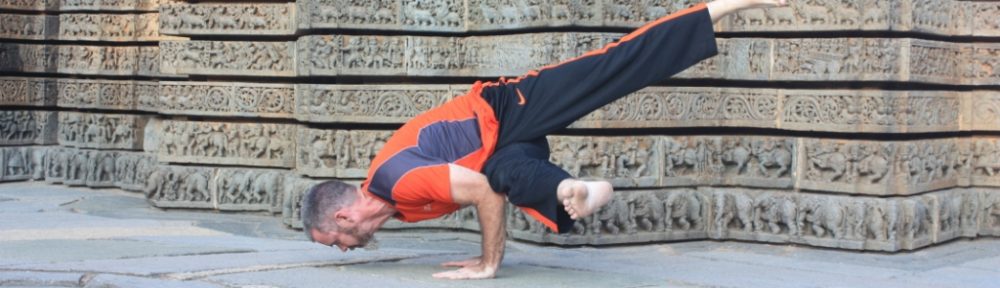
pounding out a soul song
read it right, don’t get it wrong
wait for cops to come along
and move me back to my cell
there is an iron kind of hell
i heard the cry and felt the swell
after life had rung my bell,
and doused me in a sea of hope
seek out neither king nor Pope
you’ll end up hanging by the rope
a poor and pitiless lonely dope
who never learned right from wrong
Category Archives: Poetry
POEM: Soul Drumming
POEM: Gymnosophist
the naked ape in its natural state
stripped bare of fear, living an altered trait
ashen against the sun, rinsed by the rain
his brain had long ago forgotten pain
folks see so much, and think they know him
but they can’t read his face in scowl or grin
POEM: Mundane, My Ass
Nothing is mundane, but the mind makes it so.
They scream for monsters and miracles,
and miss the magic of the mighty cricket.
Deaf to the miraculous,
everyone reaches to turn up the volume,
too few sit quietly, listening closely.
POEM: Truth Buried
Truth is under a rubble pile
covered in junk and debris
marked with (-)’s and (+)’s
chunks of value judgment
that crumbled under the weight of its immensity
or, maybe, because it was made of bankrupt material
many start the dig,
but the love of those (+)’s and (-)’s proves too strong
so they stack and mortar them into solidity
then the truth is no longer buried, but imprisoned
BOOK REVIEW: Collected Poems by W.B. Yeats
Collected Poems by W.B. Yeats
My rating: 5 of 5 stars
This collection gathers about 300 poems from 12 poetry collections by Yeats. Most of the dozen collections are included in their entirety.
Yeats is considered by some to be the best poet of the 20th century and by most to be among the best. Most poetry readers will be familiar with Yeats’ more commonly anthologized poems such as: “The Lake Isle of Innisfree,” “The Second Coming,” “Leda and the Swan,” and “Sailing to Byzantium.” However, many readers may not be familiar with the full scope of his work. Some may believe that Yeats work is antiquated, not because it isn’t approachable, but because Yeats favored traditional forms (i.e. rhymed and metered poetry) [though he did engage in experimental approaches.] By the time he was writing, there had already begun to be a shift toward free verse, and so his work may seem of a more bygone era than it was. Of course, as will be mentioned below, Yeats work included a lot of political poetry, and political poetry doesn’t tend to age well.
On subject matter more than form, Yeats was progressive and experimental. Yeats poetry drew heavily on mysticism and the occult. In his earliest collection, “Crossways,” he does as many 20th century poets and writers with mystic ambitions or interests did, and turned his attention eastward to India. However, Yeats soon decided to focus on his homeland of Ireland. Hence, one will see references to faeries and Christian mystic notions rather than appeals to Hindu mythos. Many will find Yeats’ appeal to mysticism intriguing.
Yeats’ poems were also often political in nature. He viewed himself as Irish to the core, but was among the Protestant minority. While he was an Irish nationalist who wanted an independent Ireland, he wasn’t so keen on the fact that the full expression of that would mean that his sect, whose power outsized its numbers — would suffer a shift from the ruling to the ruled. “Easter, 1916” is among his most well-known and potent political poems. His feelings about Ireland being yoked into Britain’s affairs can most vividly be seen in “An Irishman Foresees His Death.”
I enjoyed experiencing the full breadth of Yeats’ work from tiny amusing poems like “A Drinking Song” to clever lessons such as “Beggar to Beggar Cried” to more extensive commentary on social issues like “Lapis Lazuli.” I’d highly recommend this collection for poetry readers.
BOOK REVIEW: Selected Poems, 1957-1981 by Ted Hughes
Selected Poems, 1957-1981 by Ted Hughes
My rating: 5 of 5 stars
This is a collection of 150+ poems extracted from 15 works from Ted Hughes’ early career. Note: there is a second volume that picks up where this one leaves off and continues to 1994, as well as another volume entitled “New Selected Poems” that covers his entire poetic career from 1957 – 1994.
The selected poems are largely free verse. However, particularly among his early works there are many examples of rhymed and near-rhymed verse. As would be expected of a collection of selections covering more than two decades, the topics and themes are varied. However, naturalistic symbolism is the dominant approach across the collection, as seen in one of Hughes’ most famous poems, “The Jaguar.” There are poems that take Shakespeare’s “Tempest,” Greek mythology, or other human-centric subjects for their subject matter, but imagery from nature is the most common means used by Hughes to achieve his aim – even when that aim is commenting on human subject matter.
There are a couple pages of explanatory notes, but – otherwise – the book is all poems, and no forwards, conclusions, graphics, or other ancillary matter. It’s 222 pages packed with poetry.
I enjoyed Hughes’ poetry and am fond of his use of natural imagery. That imagery is vivid and evocative, but some readers may find it a bit arcane or obscure for their tastes. One has to ride it like a river, rather than excavating like an archeologist. I would highly recommend this book for poetry readers.
POEM: Hanoi Epiphany
I strolled the streets of Hanoi,
-past Starbucks, McDonalds, and American fast-food joints I thought had gone belly up decades ago.
-past young lovers on park benches sneaking affections,
-past vendor carts selling banh mi in brightly colored wrappers,
-past the stock exchange,
-past incense-wielding worshippers at the temple,
-past a dancing Minion selling electronics,
-past Christmas LED lights shaped like pine trees,
and I couldn’t help but wonder how it would look if we hadn’t sent 60,000 off to be killed, 2-and-a-half times that number to be shot, stabbed, mutilated, or fragged — not to mention the three million dead among civilians and enemy forces.
Hindsight may be 20/20, but I hope we do at least 50-50.
POEM: Exiled
Poem: Into Madness

Panic is danced into madness
by every soul that fears.
Bombing empty toy factories,
storming the field of tears.
And a million miles down that line,
you’re back where you began.
In the grip of some fresh mania
of leaders tall and tan.
Let me sleep upon that madness.
It won’t survive my dreams.
Your harbinger of holocaust
is daintier than he seems.