I woke up seeing stars up in the sky, a blanket brightly twinkling above. But I could only guess just where I lie, and knew no better from what place I fell. And for a moment I was lost in stars, and felt the vastness I'd been cast against. What was it that I had rebelled against? What got me tossed from beyond vaulted skies? Was it that I tried counting all the stars? Or that I turned my focus from above? Can I return some day from whence I fell? Or is it best to stay right where I lie? You may think I tell myself perfect lies, that I'm angry with those I've sinned against. But I'm not sure my exile was a fall, and I'm not sure I lived beyond the sky. What of the freedom not seen far above? What of the beauty seen amid the stars? For now, I reside in the field of stars. Where passersby told stories full of lies, and I have no love for the far above. It's just a place that I once raged against. They preach earth and water and endless skies, but not a thing is here that never fell. It's all matter that spiraled as it fell that formed this platform amid blazing stars. A vacuum beyond mountain, sea, and sky. But I remember that's the greatest lie - the one that I had always railed against. That meaning lie in words like "far above." That word is laden with judgment: "above." And where's the gravity by which I fell? Can puny bodies be so pulled against where exist so many colossal stars? So many obstacles between us lie, and so much nothing before reaching sky. There's no "above," only a field of stars. And no one fell; that's just a peoples' lie. Nothing stands against me - no endless sky.
Category Archives: Sestina
POEM: Flood [PoMo Day 6 – Sestina]
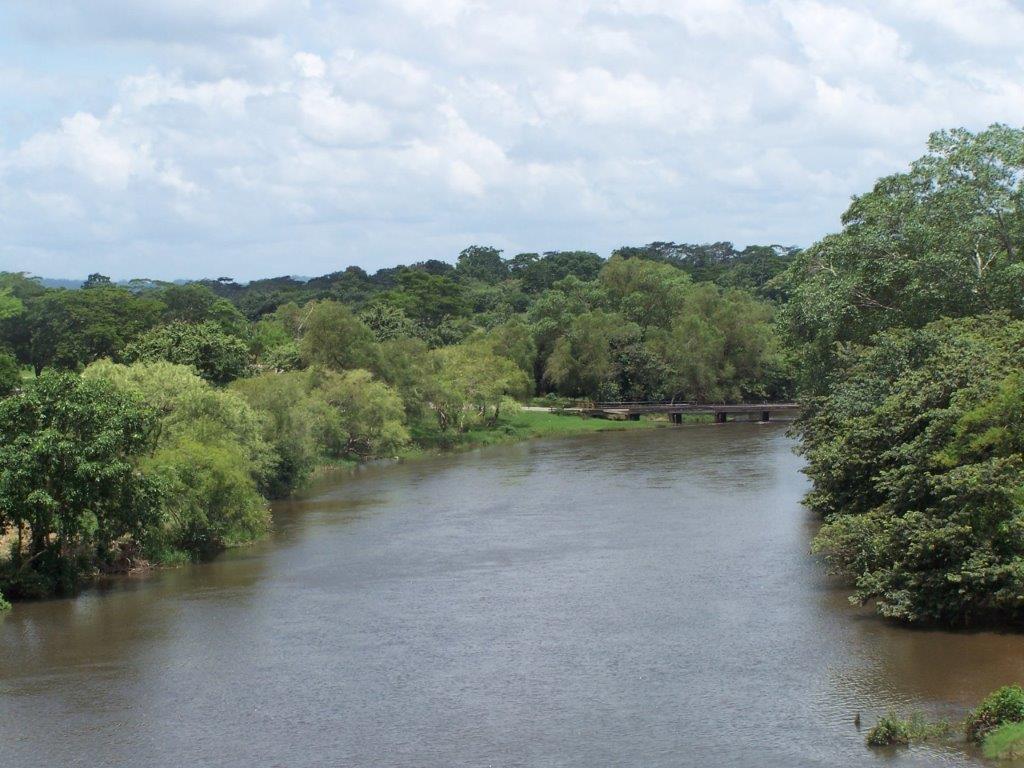
The rising waters spill into a flood. All who aren't holding tightly are soon lost. Dead swept away in tobacco-colored mud -- clogged and coated as they're rolled and tossed; crushed and carried with all other debris; ever moving toward a wide blue sea. But one body will never reach that sea. Some wide river will dissipate the flood, and banks and bends will catch all that debris. There's more than one route to a lifetime lost. Not everything is caught that's deluge tossed -- some stay, hidden, buried in deepest mud. What's stuck in mud long enough becomes mud, and nothing more than silt reaches the sea. Though clues will be found from the houses tossed -- like jack-booted thugs - so behaves the flood. It ensures treasures remain ever lost, while unloved scraps stay twisted in debris. How quickly cherished goods become debris -- just swirl them around in some dodgy mud, and what was loved will be forever lost as if it were trapped deep below the sea with speed as surprising as in flashflood. Only spared heirlooms avert being tossed. The churning river makes me feel I'm tossed -- as if circulating in the debris. But I am not a victim of this flood, just one who sees the future in the mud and one who sees the past writ in the sea, and, seeing both, is nonetheless still lost. To know maps doesn't mean to never be lost. To ride floods requires being rudely tossed, and doesn't mean you'll ever detect the sea, nor that you'll be classed: "unloved debris." There's always something shining in the mud -- all the more so after the crest of flood. So, be lost without becoming debris -- a thing that's tossed but shines in the mud, and, never seeking sea, just rides the flood.
POEM: Crisscrossed by Roads [Sestina]
I walked beyond the world of roads —
out where the mountains meet the sky.
The time moves slowly in those parts,
where miles are trod to gain meters,
but no one cares when the sun is high
’cause getting somewhere ain’t the goal.
But who can say what is the goal
in those lands that lie beyond roads?
Some listen for the voice on high —
thundered instructions from the sky,
counting out each exact meter,
though without a listing of parts.
Not everything is made of parts.
Not every walk requires a goal,
or counting of kilometers.
This world is crisscrossed in roads;
though seen only from high in sky,
but the trap is felt at no great height.
The surface etch shows: low or high —
those lines: the earth-scarred parts,
cut clean, like contrails through the sky.
Arrows converging on a goal,
the goal of longer, wider roads,
stretching out each kilometer.
Who’ll save the walked kilometers?
When roads are low, who’ll take the high?
Who’ll not ask to extend those roads
into distant, dangerous parts
when workers need their next new goal
and flyers see no lights from the sky?
We measure miles across the sky
and judge all sprints on the meter.
There’s no escaping precise goals;
there’s jumping long, pole-vaulting high,
making sums greater than the parts,
and building new (and longer) roads.
Now our old nodes have blown sky high.
We’ve teetered meters, taking part
in goals far bolder than new roads.