
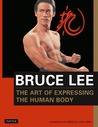
 Bruce Lee: The Art of Expressing the Human Body by Bruce Lee
My rating: 4 of 5 stars
Even by today’s standards in which movie stars have personal trainers and scientifically formulated diets, Bruce Lee’s physique compares favorably to the most buff of leading men. In the 70’s there was no one even close. Consider “Way of the Dragon” in which Lee fights a character played by Chuck Norris. At the time Norris was the World Middleweight Karate Champion, a top-ranked athlete, but he looks comparatively doughy set across from Lee. What makes Little’s book intriguing for those interested in fitness is that it answers the question of how Lee achieved such a physique without the benefit of the last few decades of exercise and nutrition science. Sure, he had favorably genetics, but he also had—by all accounts—a sterling work ethic and a conscientious approach to fitness.
I wouldn’t recommend that one follow the programs described in this book wholesale without careful evaluation of the details. While Lee was impressive, he wasn’t free of athletic injuries. Best practices have shifted here and there with regard to the science of human performance. This isn’t meant to denigrate Lee’s approach. In fact, Lee, himself, followed the science of his time and recommended his students do the same. (For those unfamiliar with Lee’s martial art, Jeet Kune Do, its central tenet is to take what is of value and let go of what is not—i.e. never rigidly hold onto set notions.) It should also be noted that Lee—perhaps because of this philosophy—was often ahead of his time on issues like cross-training. I don’t want to leave the impression that there isn’t a lot that holds up well in this book. I’m saying that this is a book about how one man achieved spectacular results, but shouldn’t necessarily be taken as one’s one-and-only guide to fitness (though it does cover much of the relevant territory.) Intermediate and advanced fitness practitioners should know what to take and what to leave, but beginners should proceed with caution.
The book addresses Lee’s approaches to isometrics, weight training, calisthenics, flexibility, nutrition, cardio, and what would today be called functional training (i.e. fitness activities designed to better one’s performance of movements of the sort that one will use in one’s intended activity—in this case martial arts.) It’s important to note that Lee’s approach was optimized to the martial arts. For martial arts one needs a balanced approach to fitness, and it’s not all about aesthetics like it is for bodybuilders. One must be flexible as well as strong and be mobile more than muscly.
The books 24 chapters and ancillary matter are logically arranged. The chapters at the fore provide general information on weightlifting and related topics, the middle of the book is gets into specialized exercises by body part as well as special topics like stretching and nutrition, and the final few chapters get into sequencing and other information about how Lee arranged his fitness activities. Little draws heavily on Lee’s notes, often using his words verbatim.
The one way in which I think the book could be substantially improved would be more relevant photos and graphics, particularly in the sections that deal with specialized exercises. Don’t get me wrong, there are many photos in the book. However, they are all of Lee, and, of course, he had a great deal more photos taken either in action sequences (e.g. flying kicks, etc.) or in candid moments. There are few photos of Lee engaged in “sausage-making” activities like lifting weights or doing calisthenics. However, the subject in the photo need not be Lee. Photos would also allow the author to make the text in those chapters a little less heavy and more readable, and—therefore—it wouldn’t necessarily add to page count as much as one might think.
I’d recommend this book for fitness enthusiasts and martial artists. From beginner to advanced, there’s something for everyone to take away from this book.


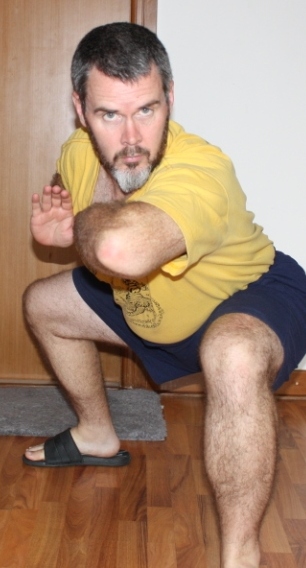
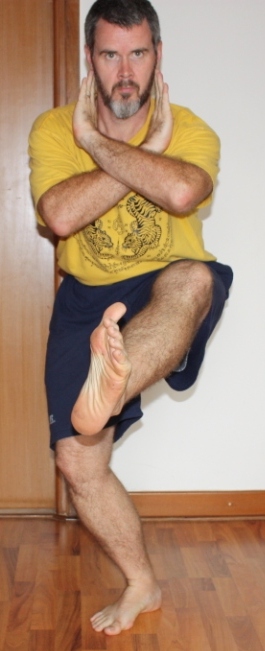

 Tiger Riding for Beginners