BOOK REVIEW: Catching Fire by Suzanne Collins

Catching Fire (The Hunger Games, #2)Catching Fire by Suzanne Collins
My rating: 5 of 5 stars

Amazon page

[Spoiler Note: While I intend—as usual–to keep the spoilers minimal (insignificant) for the book under review, it’s hard to review it without major spoilers of the first book in the series—“The Hunger Games.” If you haven’t read that book, you may want to before you read this review.]

As a surviving / winning tribute, life should have been cake for Katniss Everdeen. She returned to her family and friends in District 12, but instead of subsistence living she has a beautiful house and more money than she can spend. Of course, winning tributes are celebrities and have to serve as mentors to future tributes—most of whom will die. Still, the rest of the year she could be happy, except that the gambit by which she managed to save Peeta (one-third of her love triangle) as well as herself in the first book (one of them should have died, per the rules of the Hunger Games), has riled President Snow. Snow intends to do everything in his power to make sure she doesn’t live out her days in fame and comfort. The President might have found it strategic to let matters lie, but each Games brings Katniss back into the spotlight. As the 75th anniversary games approach, she will be back in the public eye, both during a victory tour and the Hunger Games.

At this point, one might be wondering whether a major criticism of this book will be the same as was leveled against “Star Wars: The Force Awakens”—i.e. that it’s a fine story but essentially a repeat of the original with a bigger death star. There’s an argument that that’s an apt description, but there are also counterpoints. The first retort is “What does it matter as long as the story is enjoyable and the tension is ratcheted up?”

The other major justification is that this part is a necessary bridge between the first and the last books in two regards. For one thing, we have to see the dawn of the revolution and Katniss’s—unwitting, but significant–role in it. A couple of the most emotionally intense moments of the book involve the first sparks of rebellion before the Games even begin to be replayed. For another, the love triangle is re-intensified. The survival of Katniss and Peeta hinges on their ability to continue to act out the star-crossed lover card that saved them in the first book—obviously straining the other edge of the triangle.

I enjoyed this installment, and think Collins did a good job of giving readers enough new tension to make the story gripping despite the fact that replaying the Games is at the heart of the story. I’d recommend the book for anybody who finds dystopian fiction appealing—whether a YA or not.

View all my reviews

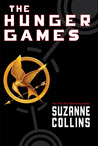
BOOK REVIEW: The Hunger Games by Suzanne Collins

The Hunger Games (The Hunger Games, #1)The Hunger Games by Suzanne Collins
My rating: 5 of 5 stars

Amazon page

At the risk of mortally offending fans of Lois Lowry’s “The Giver,” I’m going to introduce “The Hunger Games” as the book that launched a thousand young adult (YA) dystopias. Yes, I’m aware that Lowry’s book came out much earlier and was both a commercial and literary success. However, it came out so much earlier (i.e. 15 years earlier), and without noteworthy copycats. “Hunger Games” was immediately followed by a dystopian YA book and movie blitzkrieg. This might be a trick of timing, but I don’t think one can dismiss the Collin’s story and characters as features that spawned copies meh, bad, and ugly. (Which is to say, those who started their dystopian YA projects after reading “Hunger Games” were probably too late, but similar projects in the pipeline probably benefited enormously.)

I’m not holding all the horrible works of copycats against Collins. I think she made a tight and engaging story of a love triangle meets “The Running Man.” That’s my best summation, but to elaborate: A girl in a burgeoning relationship with a young man from her district is forced into a kill-or-be-killed futuristic version of gladiatorial games, during which she becomes attached to her fellow district tribute under the crucible of combat.

The main characters are suitably likable and flawed. Each of the main characters is in some regards a font of virtue with a tragic weakness. The lead, Katniss Everdeen, sacrifices by volunteering take her little sister’s place in the games, but she also strings along the two love interests and isn’t above the cold calculation that survival requires. Her boyfriend from back home, Gale, turns out to be even more willing to do whatever it takes. The most virtuous of the leading characters, Peeta, may lack a dark side, but he’s also comparatively milquetoast–surviving only through charisma and the kindness of others.

If the leading characters feel true in their complexity, Collins takes a calculated risk by making a host of Capitol characters that are caricatures of humanity. They are over-the-top in their shallowness and narcissism. There are exceptions, but many of these characters seem like the worst of pre-teens trapped in the lives of adults. They are obsessed with meaningless things and are numb to consequences felt by others. I’m not sure why that would appeal to readers of YA fiction, but maybe kids who read look around at the kids that don’t and see people who look a lot like these Capitol caricatures. Mere speculation.

I held off reading this series for a while, but I must admit that I enjoyed all three of the books in the series (to varying degrees.) I’d recommend “The Hunger Games” for anyone who doesn’t get too bummed out by reading dystopian fiction. It’s fast-paced and highly readable.

View all my reviews