BOOK: “Zatanna” by Paul Dini, et. al.

ZatannaZatanna by Paul Dini
My rating: 4 of 5 stars

Publisher Site — DC Comics

Zatanna is a magician, both in the sense of being a professional stage illusionist and in the sense of making real magic offstage. The stories contained herein are about her heroic use of the latter magic, though they are often set to the backdrop of her professional life, i.e. clubs and other entertainment venues. Daughter to a deceased legend of stage prestidigitation, The Great Zatara, Zatanna makes magic through verbal spells.
 
This sixteen-issue run consists mostly of standalone stories. There are a couple story arcs that span three or four issues, but for the most part the stories are wrapped up within an issue. Some of these stories dedicate panels to what’s happening with Zatanna’s long-running nemesis, Brother Night, even when the main story is unrelated to him (presumably so as to keep the readers ready to receive some larger arc.)

The stories are good, light-hearted escapism — even – perhaps – when they don’t mean to be. By that I mean that the subject matter is often dark, dealing in demons and nightmares personified, but Zatanna is usually so overpowered compared to her enemies and the book attempts to maintain a quippy comedic effect, and so the reader never feels their heroine is at risk of true danger. That said, the authors do put Zatanna in dire situations, and so the stories often do hook one into a state of wonder about how she will escape some awful fate (even while not doubting for an instant that she will.) Zatanna does have weaknesses and there is some attempt to suggest that magic has risks and consequences (otherwise, the stories would devolve into lukewarm absurdism rather quickly.)

I enjoyed this run. The art is crisp and imaginative, and the stories are often clever — if rarely taut.

View all my reviews

BOOKS: “Nightwing, Vol. 1: Leaping into the Light” by Tom Taylor

Nightwing, Vol. 1: Leaping into the LightNightwing, Vol. 1: Leaping into the Light by Tom Taylor
My rating: 5 of 5 stars

Publisher Site – DC Comics

As in a lot of the Batman stories, in this volume, Nightwing (Dick Grayson) is fighting a two-front war. On the one hand, there is a mysterious central villain du jour, Heartless — an augmented masked criminal who is killing in impoverished neighborhoods by (literally) stealing his victims’ hearts. Then, on the other hand, there is the usual systematic corruption and organized crime of his chosen city, Blüdhaven. These two fights bump into each other here and there but are largely independent of one other (at least as far as one can tell in this, the first, volume of a run.) Barbara Gordon and Tim Drake / Robin participate in the story, but other than that the only hero appearances are cameos.

I enjoyed the pacing and emotional arc of this story. My reading pleasure surprises even me because I think I would ordinarily feel the book had a poor resolution to hook ratio. (i.e. I would feel that not enough was resolved to make this feel like as satisfactory standalone story.) However, there was a resolution that offered satisfaction, but it was just not what I (or -probably- the typical reader) would think of as a normal comic book resolution. (i.e. It was not a resolution achieved by kicking and punching, but rather by soul-searching.)

At any rate, I’d highly recommend this book for comic book readers.

View all my reviews

BOOKS: “The Creature Commandos” by J.M. DeMatteis, et. al.

The Creature CommandosThe Creature Commandos by J.M. DeMatteis
My rating: 4 of 5 stars

Publisher Site – DC

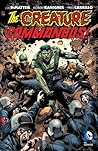
Having recently heard about the impending animated series being made under James Gunn’s aegis, I read this book to learn who, exactly, were the “Creature Commandos.” This volume collects eighteen issues of “Weird War Tales” from the 1980’s and is where this superhero team got its start. It’s not a complicated premise: a team consisting of characters based on classic horror figures is assembled to carry out challenging missions on behalf of Allied powers during World War II. It should be pointed out that these aren’t the original horror characters, but rather were mostly made in the lab using “science.” The core team of Lucky Taylor (Frankenstein’s Monster-like,) Sgt. Velcro (Dracula-like,) and Griffith (a Werewolf) were all produced in such a way by “Project M.” A fourth member of the team, Dr. Medusa (Myrra Rhodes,) got her powers in a laboratory accident (yes, this wasn’t exactly sophisticated storytelling.) An occasional fifth member J.A.K.E., the robotic infantryman, appears in only a few issues.

This collection is definitely from another era. It is written with an audience of children in mind. It’s not just the “science” that lacks cleverness, but also much of the dialogue and some of the story elements. It is also different in that there is no overarching story continuity. Each episode is standalone. This is probably in part because the Creature Commandos didn’t have their own title at this point and were appearing in “Weird War Tales.” In early issues there is a fair amount of repetitive exposition to catch new readers up, but that became less prominent as the series progressed.

Having said all that, many of the stories are compelling and — despite the campiness — the authors do succeed in making the reader sympathize with the core group and their plight as humans turned monster. My only complaint about character development would be with respect to the team’s leader, Lt. Shrieve. I’m sure they were aiming for “gruff, war-hardened, but fundamentally decent,” but through the first three-fourths of these comics Shrieve is completely detestable and has no redeeming value whatsoever. The authors did start to make course corrections toward the end, planting seeds to make Shrieve less loathsome, to make him someone that you can understand (despite his rough edges) why his team might save him instead of fragging him. I suspect that they wanted to make the most physiologically human character the least humane of the characters, but they took it too far.

All and all, I found this collection enjoyable to read — despite being juvenile and camp — and am looking forward to what they will do in the animated TV series. [Note: It is a different slate of characters and is otherwise updated to appeal to an adult audience, but – I suspect – draws from the original source material in some ways.]

View all my reviews

BOOKS: “Batwing, Vol. 1: The Lost Kingdom” by Judd Winick

Batwing, Vol. 1: The Lost KingdomBatwing, Vol. 1: The Lost Kingdom by Judd Winick
My rating: 4 of 5 stars

Amazon.in page

This New 52 spinoff takes the Batman mythos out of Gotham and into the Democratic Republic of Congo. Batman, himself, plays largely a supporting role as mentor and equipment provider to David Zavimbe, a.k.a. Batwing. The book is careful to avoid having Batman play the role of rescuer, but instead, when Batwing and Batman fight together they do so largely as peers.

I’ve got to say that the name had me worried. It’s like a mashup of “Batman” and “Nightwing” and seems lazy and uninspired in a way that I feared might infect the comic. However, character building is a strength in this volume. David Zavimbe is a former child soldier in the Congo, particularly gifted in killing — though tormented by it, torment that reflects itself in PTSD.

While Batwing’s abilities paired with Bruce Wayne’s technology makes the Congolese superhero a force to be reckoned with, Batwing meets his match in a mysterious villain who calls himself “Massacre.” This six-issue volume focuses on the on-going battle between Batwing and Massacre, as the former tries to disrupt the latter’s killing spree.

This arc is stimulating in that it deals heavily in the complex realities of war-torn Africa. There is the issue of redemption, and whether it is even possible for someone who has been a cold-blooded killer. But the story also generates ambiguity about who is right, and even whether “right” is meaningful in a context where everyone has blood on his hands.

I enjoyed reading this book and would recommend it for all comic book readers, especially those who like either Batman, Black Panther, or both.

View all my reviews

BOOKS: “Batman: Killing Time” by Tom King

Batman: Killing TimeBatman: Killing Time by Tom King
My rating: 5 of 5 stars

Amazon.in Page

Killing Time is a MacGuffin driven Batman story, though less Batman-centric than most of his eponymous titles. For any readers who might be unfamiliar with the term “MacGuffin,” it’s an object that motivates the characters to heroic and villainous extremes of behavior for reasons about which the reader is largely (or completely) left in the dark. Over the course of the story, the reader is teased information about the MacGuffin, but never with enough certainty or detail that it ever feels like it’s not a MacGuffin. On the other hand, it does feel as though there is self-awareness of the MacGuffin-esque nature of the story, and there are some strengths that I think more than offset what might otherwise be considered the laziest of storytelling.

What are these strengths of which I write? First of all, there is a disjointed, non-linear story presentation that facilitates revelations and maintenance of tension, but it is done artfully enough that one isn’t likely to lose the thread. Second, there are some intriguing characters (and some fascinating character development) in the story. Much of the story revolves around an uneasy alliance between Catwoman and the Riddler, and that is explored in detail. There is also a character known only as “the Help” who is both brought to life in a compelling way, but who also generates tension because he’s every bit a match for Batman in a slug-fest. Thirdly, while the book of epic proportions in some sense, with street criminal melees and the like, it’s quite street-level throughout, not veering into magic or god-tier superpowers. Finally, it is a complete and satisfying story arc. [My biggest pet peeve with comic volumes is that they often don’t feel concluded.]

I enjoyed reading this comic book. It’s fast-paced and isn’t afraid to give supporting characters some space to steal the show. If you’re a Batman fan, it’s definitely worth reading.

View all my reviews

BOOKS: “Saga of the Swamp Thing: Book One” by Alan Moore

Saga of the Swamp Thing, Book OneSaga of the Swamp Thing, Book One by Alan Moore
My rating: 5 of 5 stars

Amazon.in Page

This volume presents two separate and complete story arcs. The first features the Floronic Man (Jason Woodrue) as the main villain, and it deals heavily in the origins of Swamp Thing and the creature’s struggles to come to grips with who it is and why it experiences the world as it does. The second story makes a shift to a more supernatural threat and shows a Swamp Thing who is more comfortable in its… roots? twigs? foliage? — whatever Swamp Thing has in lieu of skin.

Alan Moore does his usual superb job of creating a clever and satisfying set of tales. Swamp Thing was groundbreaking in its cross-genre mélange of horror, supernatural, eco-fiction, and sci-fi. There is also a certain smartness about the comic. One is led to consider questions of consciousness and humanity’s role in nature through these stories. And solutions are rarely achieved by punching the villain into a stupor. This won’t be for everyone. In some ways, the comic elevates the wise old mentor to the role of hero.

I enjoyed reading this book and would highly recommend it for readers of comic books and graphic novels.

View all my reviews

BOOKS: Batman Arkham: Penguin by Bill Finger, et. al.

Batman Arkham: PenguinBatman Arkham: Penguin by Bill Finger
My rating: 5 of 5 stars

Amazon.in Page

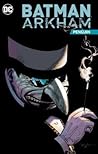
Drawing from 70 years of stories, this collection of issues involving the Penguin as Batman’s villain du jour really shows the shifting landscape of comic books over the decades. In the early issues, written with a young audience in mind, the Penguin is a skillful thief, but also kind of goofy, camp, and with not really much menace. By the last issue included, we see the hard edge of psychopathy and the gross deformity of this classic villain.

I was pleasantly surprised with this collection. Often these cobbled together comic collections lack coherent storytelling and feel as cheap and lazy as a sitcom clip show, but this volume shows several satisfying story arcs, and — while there is no overarching arc — it makes for a satisfying read.

I enjoyed reading this collection and seeing, through it, the evolution of comic books.

View all my reviews

BOOK REVIEW: Batman: Arkham Asylum by Grant Morrison

Batman: Arkham Asylum - A Serious House on Serious EarthBatman: Arkham Asylum – A Serious House on Serious Earth by Grant Morrison

My rating: 4 of 5 stars

Amazon page

This is the third, and probably last, installment in my “Happy 75th Anniversary, Batman” series of reviews. Batman: Arkham Asylum is an attempt to convey a nightmare on the page, and it succeeds both graphically and narratively. It’s quite different from other Batman comics in style and content. It takes the dark nature of the Dark Knight’s mythology to the extreme.

There are two story-lines woven together in Batman: Arkham Asylum. The main line involves Batman entering an Arkham Asylum being run by the inmates. There he finds himself pitted against his foes: the Joker, Two-Face, Scarecrow, and others. The other is the 19th century tale of Amadeus Arkham’s descent into madness.

As is common in the Batman mythology, psychiatrists are portrayed as walking the razor’s edge between sanity and insanity. For those who don’t read comic books, this is most readily exemplified by the character of Dr. Crane / Scarecrow in the first film of the Nolan trilogy, Batman Begins. I’m not sure whether the point is to create enemies that are so strong they can bend doctors to their will, or if there is a general disdain for psychiatrists—as one might see a dislike of lawyers in other stories.

Among the nightmarish elements of this work is the fact that Batman’s face is never seen clearly. The Dark Knight is always a vaguely and/or surrealistically silhouetted. There’s a mix of sharpness and haziness in the graphics. The Joker gets his own crazy scrawl font. The graphics are as creepy and strange as can be. On my low-end Kindle, the work was in black and white, which worked well. I did look at the sample pages, and the color version uses a lot of sepia and crimson.

Batman: Arkham Asylum asks us to consider whether Bruce Wayne / Batman is sane or just a lunatic with a moral code.

View all my reviews