Today is a day of protest in Bangalore to decry sexual assaults on women and children. It seems like an apropos time to offer some advice on self-defense.
1.) NEVER GET INTO A VEHICLE or allow yourself to be taken to another location:
This is line in the sand #1. He’s telling you to get in the vehicle because he wants to do something that he’s scared to do at the present location. That means your chances if you scream, run, fight, or some combination of the above are better than if you get in the car. A thief wants your money/possessions and then wants to put as much distance between you and he as possible. Don’t believe anything a thug tells you about why he wants to take you somewhere–no matter what kind of soothing tone he may use. He means to do you harm at the end of that ride.
2.) Never allow your freedom of movement to be restrained:
Line in the sand #2. The same logic applies. He wants to bind or handcuff you because he’s scared to do what he wants to do with an unrestrained victim. Your chances are better if you scream, run, fight, or all of the above than if you allow yourself to be hogtied.
3.) If you remember nothing else from this post, remember points 1 and 2.
Source: clutterclearcoach.com
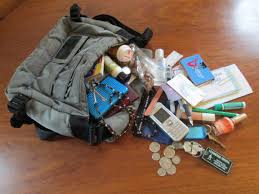
4.) 2 ways a cluttered purse can be perilous:
First, if you decide to carry some form of weapon (e.g. pepper-spay or a stun-gun) or the ineloquently named “rape-whistle”, it will do you less than no good if you can’t put your hand on it instantaneously. (Why less than no good? Because your eyes will be on your bag, instead of on the threat.)
Second, see point 5, below.
5.) How to be robbed, a primer:
You’ve probably heard the mantra, “Never fight over money or possessions, they can be replaced, you can’t!” That’s sound advice. However, you must keep in mind that violent criminals use “gimme your money” as a ploy. They wait until your eyes go down and then they pounce with much more ominous intent. This is the second way a cluttered purse can be perilous. If you start looking through your purse, you’re at risk. Pitch the whole purse, let them find it. If they don’t go for it, then it’s time to flee or fight.
What’s the “proper way” to be robbed? You throw the money in the robber’s direction (preferably between his feet and behind him) and then you run the other direction. If he’s a robber, he’ll grab the money and hightail it in the opposite direction from you. If he chases you, then it’s time to be ready to fight for your life.
 6.) Choose classes wisely:
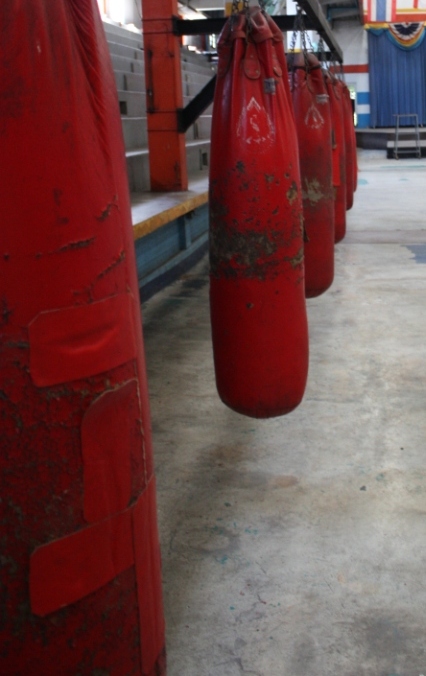
There are a lot of offerings of self-defense and martial arts classes. The first thing to know is the difference between self-defense and martial arts classes. Self-defense classes will teach you a few basic, easily remembered techniques to get out of the grasp of an unsophisticated attacker so that you can run. If you know that you don’t have a lot of time and energy to devote to learning to protect yourself, this is the type of class you should pursue. You probably won’t learn what you need to get safely away from an athletic psychopath, but–fortunately–such individuals are rather rare. I’d recommend this type of training periodically even for women with no interest in martial arts.
There are many different primary objectives one may see in various martial arts, including: sport, entertainment, sustaining a historical lineage, or preserving historical / cultural events and ways. While self-defense is one of several objectives of almost all martial arts, it’s the primary objective that will shape the martial art and its relevance to you. Sporting martial arts will get you in fighting shape and teach you to take a hit and keep moving, but may leave you with systematic vulnerabilities around the rules of the game.
For example, if punches to the head aren’t allowed, you won’t learn to defend yourself from the head punches that a real world attacker won’t hesitate to employ. If fighting on the ground isn’t allowed, then you’ll miss out on some beneficial training. Also, in a sport you may spend a lot of time punching with a closed fist. This is great if: a.) you’ve built up bone density with bag work and exercises, b.) your hand is wrapped tightly, and c.) you have a padded glove on. If not, there’s a good chance you’ll break one of the tiny bones in your hand on the attacker’s thick, bony skull–and it may distract you enough to lose advantage. This isn’t to imply such a martial won’t prepare you better than the next woman (and better than an attacker, for that matter), but you should only do it if you’re interested in the sport as well as in defending yourself.
Martial arts for entertainment may have you spending a lot of time practicing complex, spinning, aerial maneuvers that you cannot count on being useful against an attacker on the street. Again, if you enjoy this kind of martial art for its own sake, I’m not suggesting you should abandon it or that it isn’t benefiting you at all from a defensive standpoint.
Historical martial arts often offer the advantages of being combat-oriented and not rule constrained, but you may spend a lot of time working with archaic weapons and may not practice sparring or free-form fighting–which, I would argue, is essential to being ready to defend yourself. Again, these arts are awesome, but you need to be aware of what you are studying and what it’s value is to you.
Questions to ask:
a.) Can I watch a class? I’ve heard clever explanations for why this isn’t necessary for such-and-such martial art, but if they won’t let you watch a class, I’d move on to the next place. The observation class allows you to see whether that art is right for you and whether the teacher is skilled and professional. Now, don’t expect a school to keep allowing you to show up and watch, but one class should give you enough idea. You may want to ask ahead to make sure it’s a fairly typical class. Some martial art schools occasionally have atypical classes to communicate some ancillary information to students which isn’t at all that useful in a day-to-day sense. (Alternatively, some schools have classes that are rigidly identical from one session to the next.)
b and c.) Will you teach me how to stay on my feet? and Will you teach me how to fight on the ground? The ideal answers to both is “yes.” If they answer the first question by saying, “All fights go to the ground, we teach you how to get down and control the situation.” You have some sort of submission sport school that would likely make you tough as nails. However, there’s a reason there are weight classes in those sports. You don’t want to default to the ground voluntarily with someone who outweighs you by 60 pounds and who can bench press your body weight two or three times over.
That being said, if the answer to the second question is, “No. Going to the ground is ridiculous,” you might want to move on to the next school. To summarize, you want a school that will teach you how to stay on your feet so you can get away, but, also, you want a school that’ll prepare you for the worst case scenarios.
d.) Do you do sparring, randori, rolling (as in ground-fighting free-form training), or other free-form training? Note: In most martial arts, you’ll need to spend some time learning basics before you get into sparring (and that’s a good thing, in my view.) However, if the school doesn’t do any of that type of training at any level, it probably won’t prepare you for what you are likely to face. There are some old school martial arts that only do form and technique training, but with no “unstructured” training.
My final word on looking for a school: Don’t be scared off by the students looking haggard, sweaty, and mildly gimpy by the end of class. Such a school will prepare you much better than one in which the students look pristine going home.
7.) Drill with any weapon you carry:
Believe it or not, I once saw a professional law enforcement officer who accidentally sprayed himself full in the face with pepper-spray. (Among my varied and sundry past occupations was a stint in law enforcement.) No weapon is a magic talisman that you can put in your bag and expect to have it ward off evil.
8.) Don’t expect the Hollywood plop:
Squirting an attacker with pepper-spray, shocking them with a stun gun, or even shooting them with a handgun will not necessarily immediately and definitively incapacitate them. They may keep coming, hopefully impaired, but possibly just angered. There is an old samurai saying that goes, “Even in victory, cinch tight your helmet cords.” This means, even when it looks like your attacker is down for the count, maintain caution.
9.) Remember items 1 and 2, NEVER GET IN THE CAR and NEVER LET YOURSELF BE TIED UP.


