
5 Works of Nonfiction That May Be [at least in part] Fiction

NOTE: There are many famous examples of books presented as nonfiction that turned out to be partially or completely fabricated (e.g. Go Ask Alice, A Million Little Pieces, Three Cups of Tea, The Teachings of Don Juan, and Papillon are examples that spring to mind.) That’s not what I was going for when I started this list. Instead, I was thinking of examples of books that may well be true to the best of the author’s knowledge, but which may also be examples of false memory syndrome. I became interested in this while reading Julia Shaw’s The Memory Illusion, which discusses how faulty memory can be — to the point that people can be led into false memories of something as traumatic as committing crimes that never occurred. Meredith Maran wrote a book entitled My Lie: A True Story of False Memory about what she discovered were false memories of childhood sexual abuse. So, I’m not saying these books are fabrications, and — for all I know — some may be completely true. After all, some of the featured individuals think they were exploited by the MK Ultra mind-control shenanigans, and some of them may have been, but it’s also possible some weren’t.


5.) Secret Weapons by Cheryl and Lynn Hersha: The Hersha sisters say they were in a program that turned them into femme fatales.


4.) Psychic Warrior by David Morehouse: I read about Morehouse in Jon Ronson’s The Men Who Stare at Goats. Sadly, it’s not in question that the military maintained a program of psychics, nor that Morehouse was involved in said program. What is in question is the degree to which the program had successes.


3.) Communion by Whitley Strieber: This is the most famous alien abduction story. I don’t know what really happened, but I seriously doubt it’s what the author proposed.
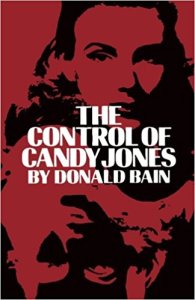

2.) The Control of Candy Jones by Donald Bain: This is a more well-known case similar to that of the Hersha sisters in which a woman was said to be reprogrammed by a nefarious psychiatrist in a mind control program. Candy Jones was famous as a pin up girl. After she got married, her behavior changed radically, and her husband asked her to participate in sessions of hypnosis which are said to have turned up a buried second personality.
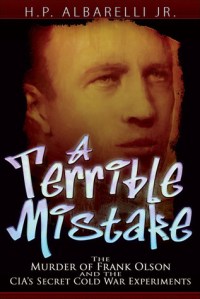

1.) A Terrible Mistake by H.P. Albarelli Jr: This is another example of a case in which there are certain remarkable facts that aren’t in dispute, but the degree to which the fine details are accurate is hard to judge. The fact is that Frank Olson was a biologist in the employ of the government, he was dosed with hallucinogenic substances, and thereafter he took a fatal plunge out of a hotel window. Whether he was murdered as a cover up or just had a bad trip has always been an open question.

BOOK REVIEW: How to Hypnotise Anyone by The Rogue Hypnotist

How to Hypnotise Anyone - Confessions of a Rogue HypnotistHow to Hypnotise Anyone – Confessions of a Rogue Hypnotist by The Rogue Hypnotist
My rating: 4 of 5 stars

Amazon page


This is the first book in a popular eBook series on hypnosis. The series is written by an anonymous hypnotist and neuro-linguistic programming (NLP) practitioner from London. As the first book, it addresses the basics of hypnotic induction, including background about what a hypnotic trance is and how it’s achieved, as well as fundamentals of voice and word choice that can influence the hypnotist’s effectiveness. The book also introduces “convincers” and “deepeners,” practices that help get the subject in the right state of mind for hypnosis and which take them deeper into trance, respectively. [Though, the author argues that the former aren’t really necessary.]

This short book consists of 29 chapters and 5 appendices. The “chapters” are as short as a single paragraph and lay out the concepts, and the appendices are scripts for hypnotic induction or trance deepening. This is a short book, and some have complained that it reads more like a detailed outline than a book. While it’s true that it’s a “just the facts” kind of format, many will find that preferable, depending upon how one likes to take in information. As long as you’re not expecting a lot of narrative examples, you may find it’s just what you are seeking. It’s written in a conversational style as if the author were telling one the information in person.

Given the controversial title, a reasonable question to ask is whether the book is practical or a lot of pie-in-the-sky ramblings by someone who doesn’t know what they are talking about. What’s the controversy? While there are many hypnotists and would-be hypnotists who claim that they can induce a hypnotic trance in anyone, regardless of the individual or the situation, the science suggests that there is continuum of degrees of hypnotizability. The distribution along this continuum follows a bell curve. What’s this mean? Almost everyone can be hypnotized to some degree, but at one tail there are people who are extremely suggestible – however, at the other end there are people who just can’t be induced. Because there are so many Hollywood misconceptions (see: “Now You See Me”) and hypnosis related fantasy and fiction, it’s not surprising that there are a lot of wrong ideas out there. [I should point out that everyone probably achieves a trance state at some point organically, but some people seem unable to be induced into that state because of anxiety, resistance, or otherwise.] Having said all that, it seemed that the author knew of what he wrote and was quite open about the myths, misconceptions, and limitations.

Later titles in this series address such topics as the details of language for hypnosis, escaping cultural hypnosis, applications for anxiety reduction, uses for combating addiction, as well as the more bizarre and arcane side of the subject.

I’d recommend this book for anyone looking for a primer on hypnosis. I was not bothered by the sparse approach. It’s quick and readable, and seemed to offer well reasoned approach to hypnotism.

View all my reviews