DAILY PHOTO: Hanuman

Taken November 2, 2013 at Hampi.

Taken November 2, 2013 at Hampi.

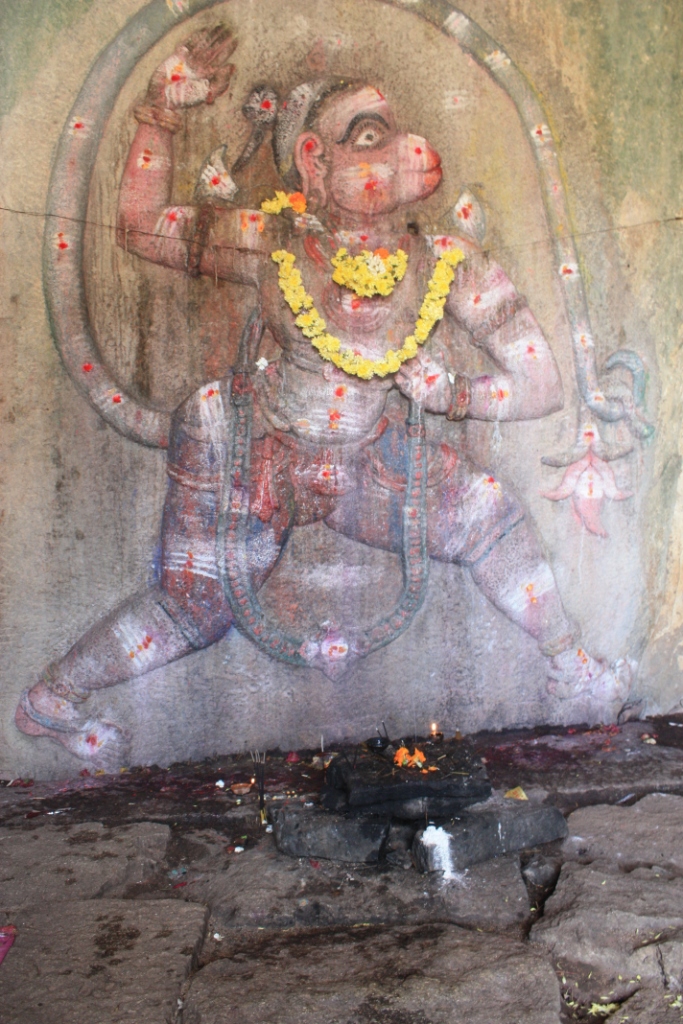
Among the many devotees of this Hindu deity are wrestlers, who admire the monkey-god for his reputed strength. In Rama’s war against Ravana, he was said to have picked up a mountain and carried it a great distance, which is pretty strong.

He’s not whimsical and mischievous like Sun Wukong, the Taoist monkey-king (who also has god-like powers), but some believe that Sun Wukong’s myth was partially influenced by Hanuman’s myth. (Of course, the more irreverent and anti-authoritarian Taoists had a different take than the caste-conscious Hindus. (Whimsicality and mischievousness are considered more virtuous among the former than the latter.)

This Hanuman temple is a small, stone-block affair abutting a giant boulder on the trail from Hampi Bazaar to Achyutaraya temple. As you can see, it still has local devotees.

DAILY PHOTO: Columns at Achyutaraya Temple

Taken November 2, 2013 at Hampi

Taken November 2, 2013 at Hampi

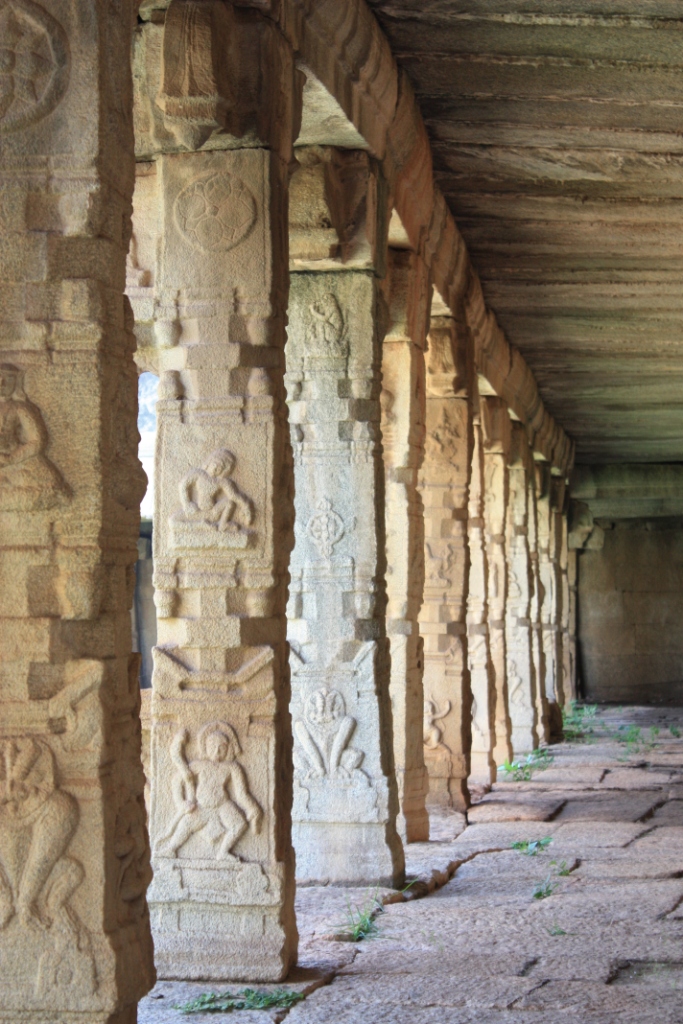
I thought the varying colors and designs of these columns made an interesting photo. This is taken at Achyutaraya Temple, which is one of the more extensive standing structures at Hampi, though not necessarily the most well-preserved/restored.

If one is on the Hampi Bazaar, walk away from Virupaksha Temple and toward the police station. Follow the steps that lie past the large bull sculpture, and when one gets to the top of the hill, just past the little Hanuman (the Hindu monkey-god) shrine, follow the fork to the right. One will soon see Achyutaraya temple down below. After visiting Achyutaraya, one can follow the flat land toward the Vittala Temple, which is sort of the crown jewel of Hampi.

DAILY PHOTO: 1008 Linga on the Tungabhadra Bank

Taken November 1, 2013 near the Tungabhadra river at Hampi.

Taken November 1, 2013 near the Tungabhadra river at Hampi.

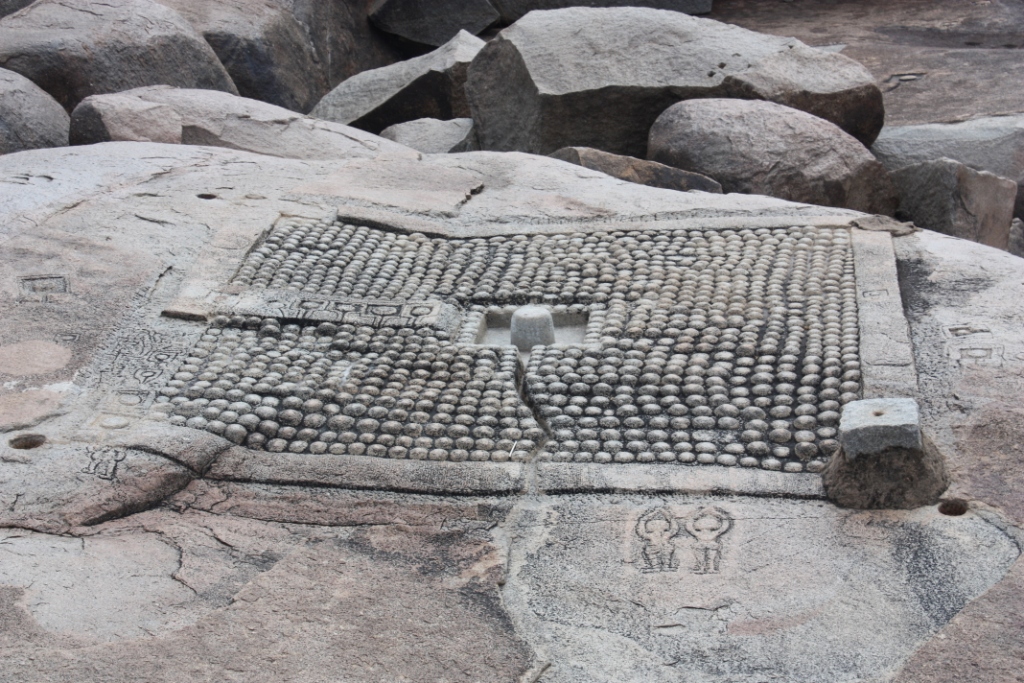
I read the Wikipedia article on Shiva linga, which said that it was a grave error to think of a lingam as a phallus. However, the article went on to say that the union of the lingam and the yoni represents the inseparability of male and female and the act of creation. Therefore, I’m sticking with the neophyte view that this symbolically represents the male organ of amour.  [Note: the terms linga and yoni are used in the Kama Sutra to describe the male and female organs, respectively. The terms may have been euphemisms that distorted the true initial meaning, or this might be taken as evidence of the correctness of the neophyte view. I’m not qualified to comment.]

Shiva is one of the top-tier aspects of God in Hinduism. He’s one aspect of the Hindu trilogy. Brahma is the creator. Vishnu is the operator. And, Shiva is the destroyer. This may seem a little ominous, but it’s obvious that something must be destroyed to make way for new things to come into existence. In a more modern interpretation, matter cannot be created or destroyed but can only change forms. These two ideas may seem very different, but when one considers that there is a finite amount of matter, if you want to make something new, then something else has to give up its matter to build it.

So while Shiva’s hallmark quote is, “I am become death, destroyer of worlds,” [reiterated by Robert Oppenheimer in referring to his role in the Manhattan Project] he’s really not so bad a deity.

DAILY PHOTO: Narayana Gurukula Bangalore

Taken on October 25, 2013.

Taken on October 25, 2013.

Well I’m back from my 10-day Thai Yoga Bodywork course, and will resume a normal posting schedule.

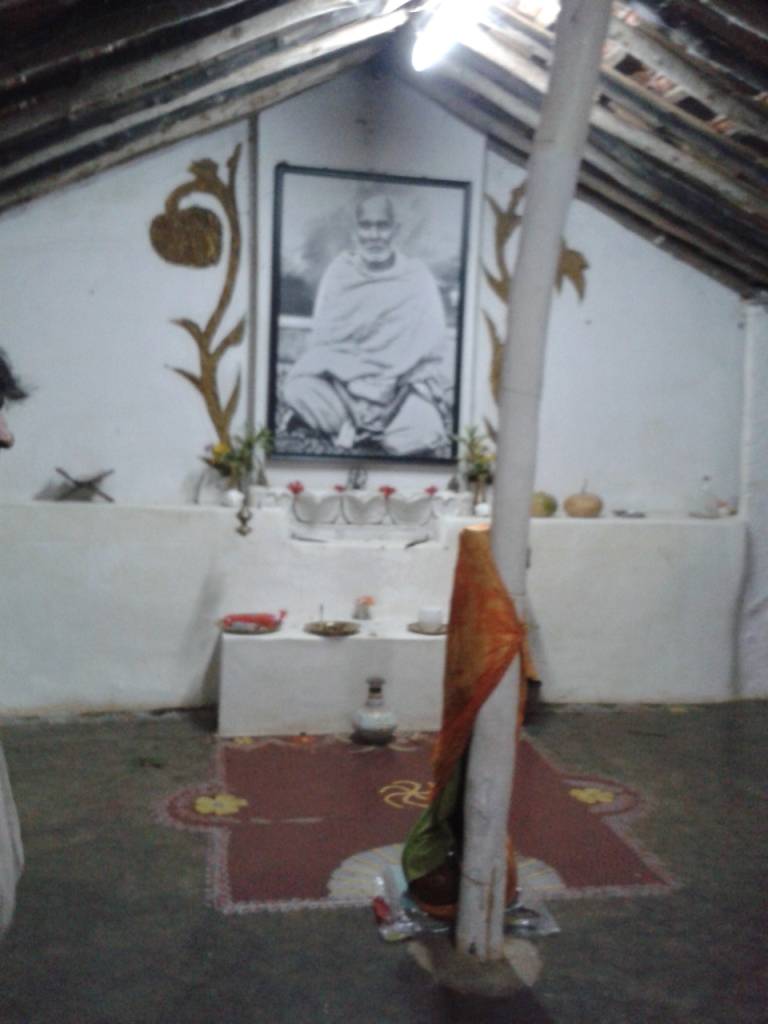
While I was gone I visited a couple  interesting places. One of which was the Narayana Gurukula Bangalore location. This small and simple ashram is watched over by a sweet lady known to visitors as “Ma”… and some really menacing looking dogs. Above is the interior of what might be called the main hall. There are some interesting stone carvings and artworks across the property as well as a little stone temple and a lilliputian book house.

I wasn’t familiar with Narayana Guru before my visit. There have been so many gurus in India, and it’s hard to know of them all. However, this particular guru and his disciples (one of whom, Nataraja Guru, started the Gurukulam) held forward-thinking views on society and spirituality. A Hindu, Narayana guru advocated unity between traditions and a focus on introspection as the route to betterment.