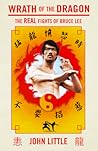
BOOK REVIEW: Wrath of the Dragon by John Little

Wrath of the Dragon: The Real Fights of Bruce LeeWrath of the Dragon: The Real Fights of Bruce Lee by John Little
My rating: 5 of 5 stars

Amazon.in Page

Release Date: September 5, 2023

There are many Bruce Lee biographies out there, from general bios (such as Matthew Polly’s Bruce Lee: A Life) to those that are much more narrowly focused (e.g. Rick Wing’s Showdown in Oakland about Lee’s fight with Wong Jack Man.) This book is somewhere in between in that it is theme-focused (Lee’s fights and matches,) but it does offer insights from Lee’s childhood through to his death as they pertain to these fights and sparring experiences. The book explores all of the known real-world scraps and matches, as well as some of the more telling sparring sessions. Fights range from Lee’s adolescent skirmishes as a punk kid through the challenge matches with extras on the set of Enter the Dragon as an astute (if still quick-tempered) master. When I say that the book includes sparring sessions, I’m not talking about every time Lee sparred, but rather those exchanges that offered particular insight into Lee’s prowess, such as his last ever sparring session with his old Wing Chun teacher, Wong Shun-Leung (a senior student of Ip Man’s) as well as those with athletes at the top of their respective combative sports.

The point of the book is to challenge a belief — widespread at times — that Lee was a blow-hard offering banal quasi-mystical Eastern philosophy and martial insights that were based only on a few Wing Chun lessons from Ip Man. In contrast, the book paints a picture of a broadly experienced fighter who was obsessive about his betterment as a martial artist. Lee was an innovator and trained with great endurance and intensity. The book portrays Lee as a martial artist of such speed and athleticism that even World Champion competitors were left in awe.

While reading, one does have to question how objectively the information is being presented. After all, Little is definitely a bit of a fanboy and he’s clearly taking a stance on Lee’s prowess. Furthermore, the fact that (at one point, I’m not sure about presently) Little was the only one with full access to Lee’s archived notes suggests his message was sufficiently on point for Lee’s family to feel comfortable with him. That said, I felt there was enough admission of Lee’s weaknesses and mistakes as well as a willingness to present competing statements when details were in question that I believe this is an honest attempt to get the details right (within the unavoidable constraints of memories of events being decades in the past and being seen from multiple perspectives — psychologically as well as geographically.)

I found this book to be fascinating from cover to cover, and well worth reading. In addition to the stories of the fights, the author discusses the lessons that Lee learned along the way. Even in winning, Lee was sometimes dissatisfied with his own performance, and this drove him to adapt and to develop new training methods. I’d highly recommend this book for those interested in the martial arts or who love a good biography.

View all my reviews

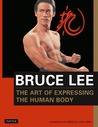
BOOK REVIEW: Bruce Lee: The Art of Expressing the Human Body by John Little

Bruce Lee: The Art of Expressing the Human BodyBruce Lee: The Art of Expressing the Human Body by Bruce Lee
My rating: 4 of 5 stars

Amazon page

Even by today’s standards in which movie stars have personal trainers and scientifically formulated diets, Bruce Lee’s physique compares favorably to the most buff of leading men. In the 70’s there was no one even close. Consider “Way of the Dragon” in which Lee fights a character played by Chuck Norris. At the time Norris was the World Middleweight Karate Champion, a top-ranked athlete, but he looks comparatively doughy set across from Lee. What makes Little’s book intriguing for those interested in fitness is that it answers the question of how Lee achieved such a physique without the benefit of the last few decades of exercise and nutrition science. Sure, he had favorably genetics, but he also had—by all accounts—a sterling work ethic and a conscientious approach to fitness.

I wouldn’t recommend that one follow the programs described in this book wholesale without careful evaluation of the details. While Lee was impressive, he wasn’t free of athletic injuries. Best practices have shifted here and there with regard to the science of human performance. This isn’t meant to denigrate Lee’s approach. In fact, Lee, himself, followed the science of his time and recommended his students do the same. (For those unfamiliar with Lee’s martial art, Jeet Kune Do, its central tenet is to take what is of value and let go of what is not—i.e. never rigidly hold onto set notions.) It should also be noted that Lee—perhaps because of this philosophy—was often ahead of his time on issues like cross-training. I don’t want to leave the impression that there isn’t a lot that holds up well in this book. I’m saying that this is a book about how one man achieved spectacular results, but shouldn’t necessarily be taken as one’s one-and-only guide to fitness (though it does cover much of the relevant territory.) Intermediate and advanced fitness practitioners should know what to take and what to leave, but beginners should proceed with caution.

The book addresses Lee’s approaches to isometrics, weight training, calisthenics, flexibility, nutrition, cardio, and what would today be called functional training (i.e. fitness activities designed to better one’s performance of movements of the sort that one will use in one’s intended activity—in this case martial arts.) It’s important to note that Lee’s approach was optimized to the martial arts. For martial arts one needs a balanced approach to fitness, and it’s not all about aesthetics like it is for bodybuilders. One must be flexible as well as strong and be mobile more than muscly.

The books 24 chapters and ancillary matter are logically arranged. The chapters at the fore provide general information on weightlifting and related topics, the middle of the book is gets into specialized exercises by body part as well as special topics like stretching and nutrition, and the final few chapters get into sequencing and other information about how Lee arranged his fitness activities. Little draws heavily on Lee’s notes, often using his words verbatim.

The one way in which I think the book could be substantially improved would be more relevant photos and graphics, particularly in the sections that deal with specialized exercises. Don’t get me wrong, there are many photos in the book. However, they are all of Lee, and, of course, he had a great deal more photos taken either in action sequences (e.g. flying kicks, etc.) or in candid moments. There are few photos of Lee engaged in “sausage-making” activities like lifting weights or doing calisthenics. However, the subject in the photo need not be Lee. Photos would also allow the author to make the text in those chapters a little less heavy and more readable, and—therefore—it wouldn’t necessarily add to page count as much as one might think.

I’d recommend this book for fitness enthusiasts and martial artists. From beginner to advanced, there’s something for everyone to take away from this book.

View all my reviews