


Breakfast, Lunch, and Dinner. (Chronologically, not in order of preference.)
Paper masala dosa for breakfast; Thai red curry for lunch; mixed fruit for dinner.

Breakfast, Lunch, and Dinner. (Chronologically, not in order of preference.)
Paper masala dosa for breakfast; Thai red curry for lunch; mixed fruit for dinner.
 Masala Lab : The Science of Indian Cooking by Krish Ashok
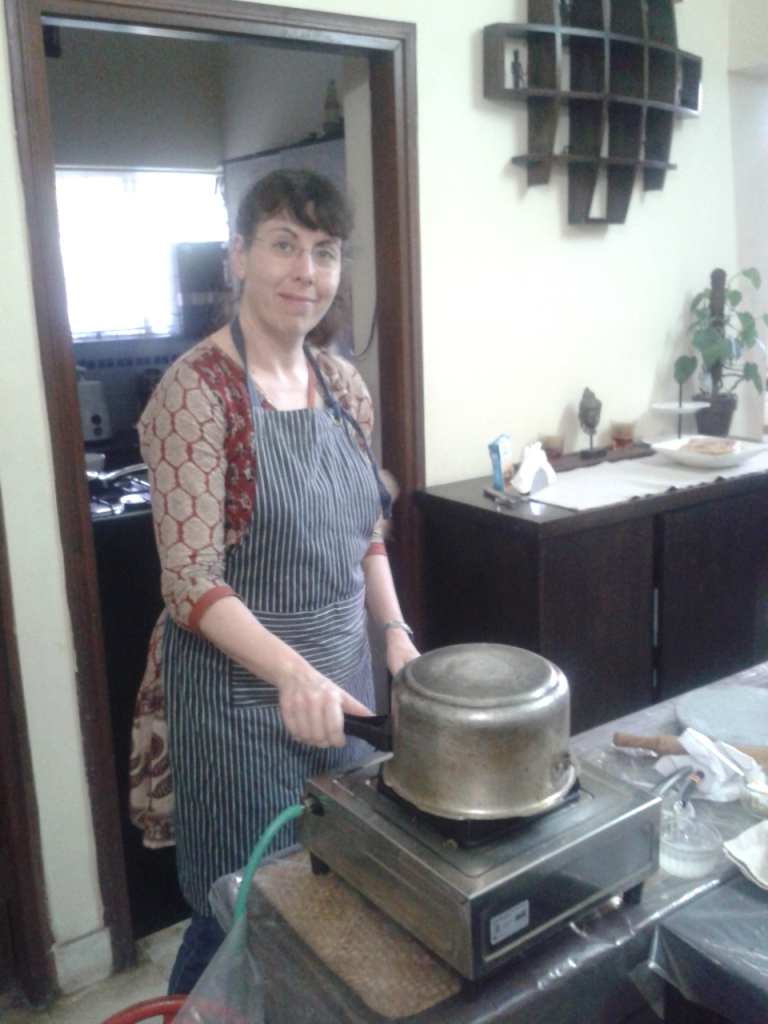
I’m stirring the pot.
The thing about Indian food–with its penchant for pureed gravies–is that I find it delectable, but often have no idea what I’m eating or how it got to me looking, tasting, and smelling like it does.
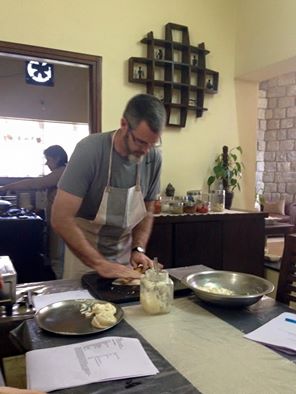
That is until recently. A couple of weeks ago I attended a cooking class at Manju’s Cooking School in RT Nagar in an attempt to rectify (or at least reduce) my ignorance. Manju’s offers a wide variety of classes (Indian and non-Indian, veg and non-Veg, cooking and baking, etc.)
I attended with a group of friends, and we constituted a class unto ourselves. We, therefore, got a quick and dirty introduction to a number of common / typical Indian foods (veg and non-veg, and both North and South Indian.) The menu we prepared consisted of two breads (kulcha and Malabar parota), dal makhani, paneer butter masala, and kadai chicken.
The class took 2.5 or 3 hours, and ended in a banquet of the foods we hand prepared.
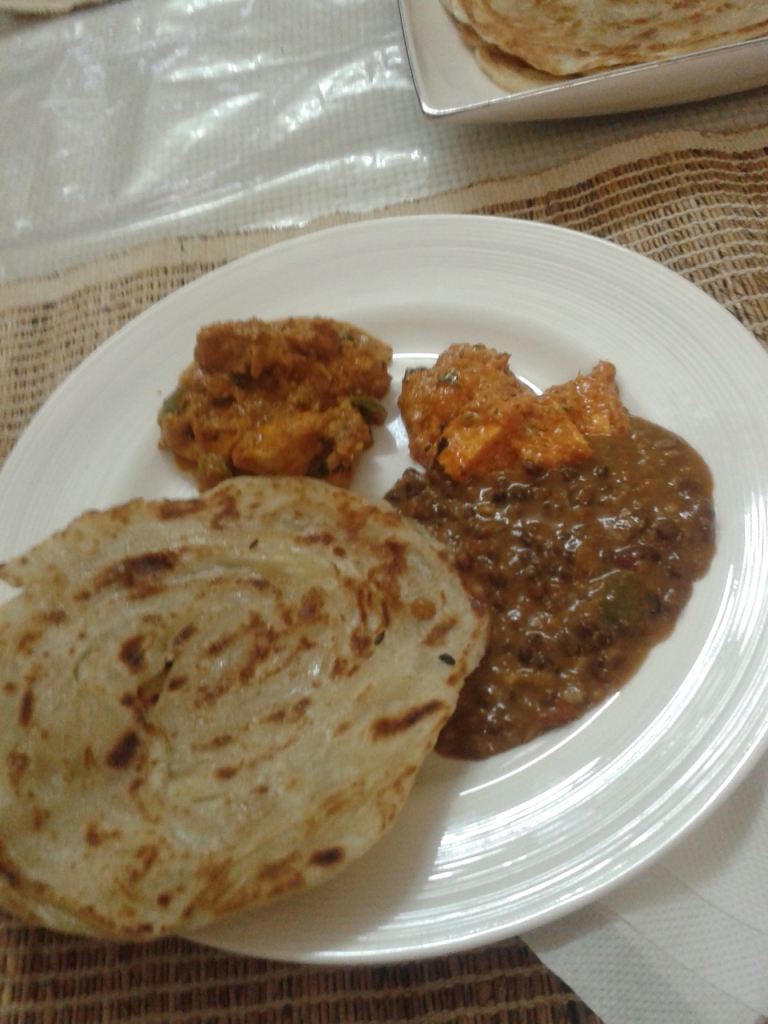
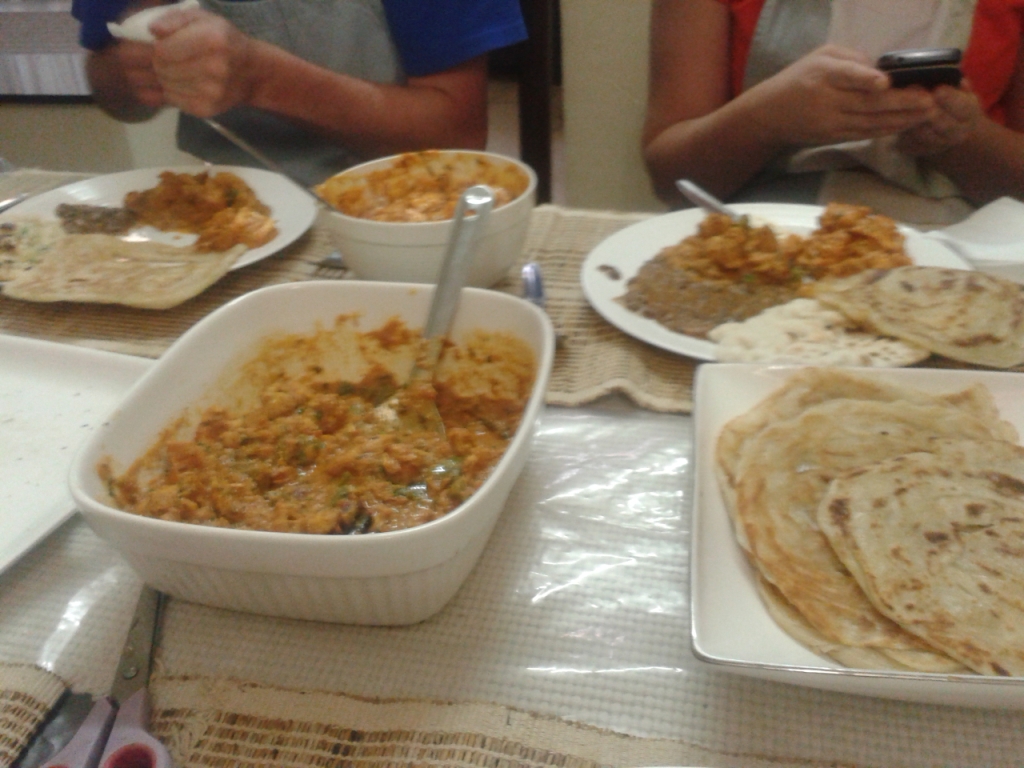
Some of the fun facts that I learned include:
-“Kadai” in the name of dish just means that it’s wok-cooked.

-A Kulcha is essentially a naan of a different thickness.
-Dal makhani requires a lot of prep, even if you have access to a pressure cooker.
-There’s a lot of finely chopped onion in these gravies that often goes unnoticed.
-One can cook with the pot upside-down. This is how we cooked Kulcha. In a restaurant it would be cooked in a Tandoor oven, but at home you can cook it stuck to the bottom of a deep pot.
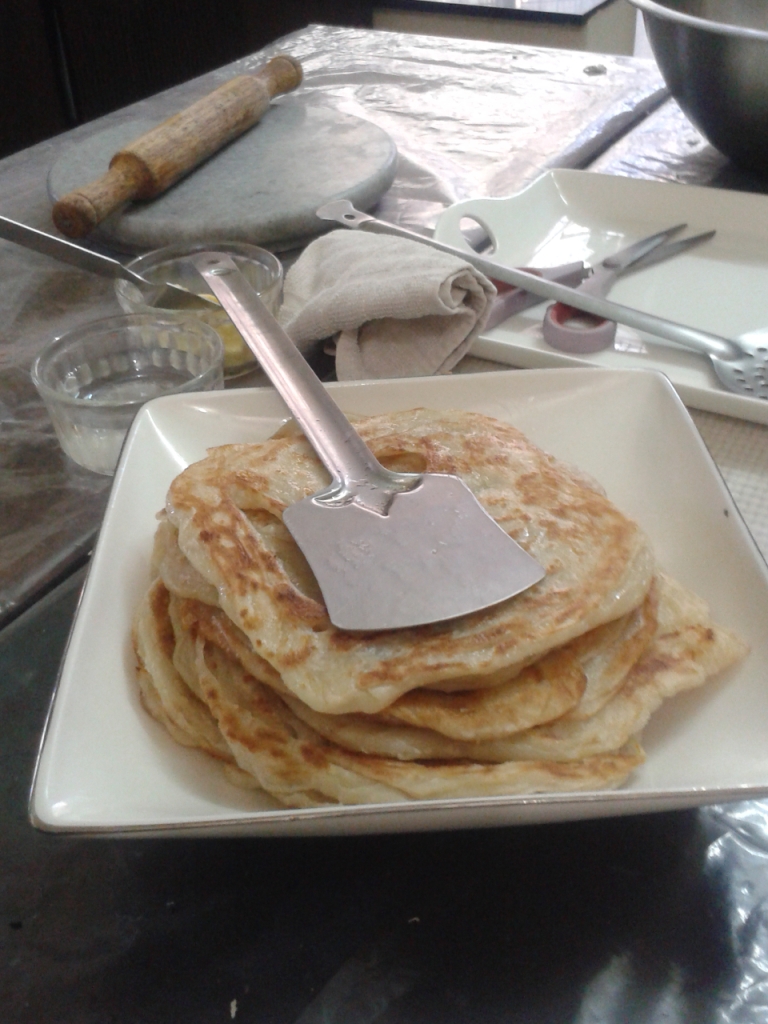
-Lastly, the key to a the flaky goodness of a Malabar parota is lots of fat… who’d have thought?


 Tiger Riding for Beginners