
Taken on December 31, 2015 in Bai Tu Long Bay

Taken on December 31, 2015 in Bai Tu Long Bay

Taken on January 1, 2016 in Bai Tu Long Bay

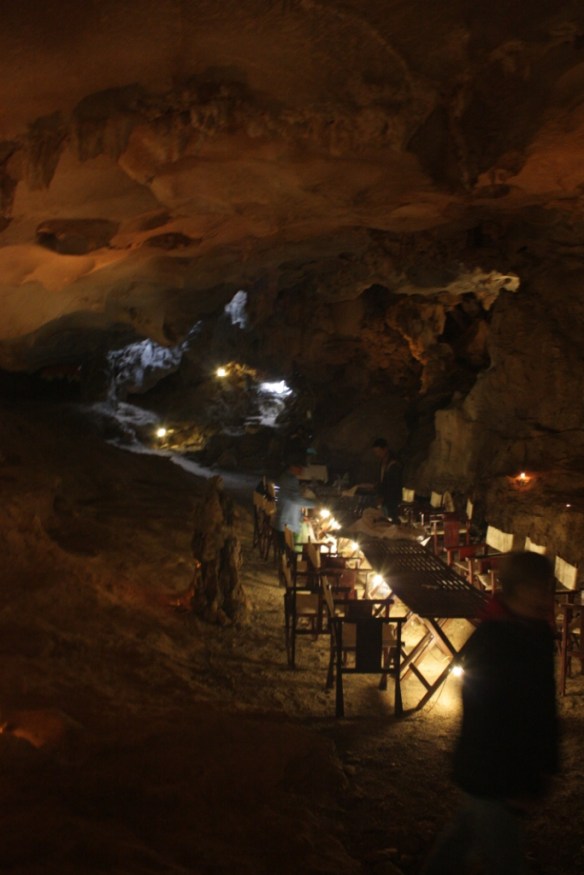
One of the interesting experiences to be had on a junk boat tour in Vietnam is dining in a cave. This cave used to be employed as a shelter for fishermen during storms. Given all the rocky skerries in the bay, I suspect being in a boat in a storm here would be terrifying. However, the caves are now prohibited to those without a license. Because the fishermen took to lopping off stalactites and stalagmites because they make for impressive mountains for bonzai displays–and those displays can be big money makers when done well.
An example of what I’m talking about can be seen below.

This one was located at the Imperial Citadel of Thang Long in Hanoi.

Taken on December 31, 2015 in Bai Tu Long Bay

Taken on December 31, 2015 in Bai Tu Long Bay
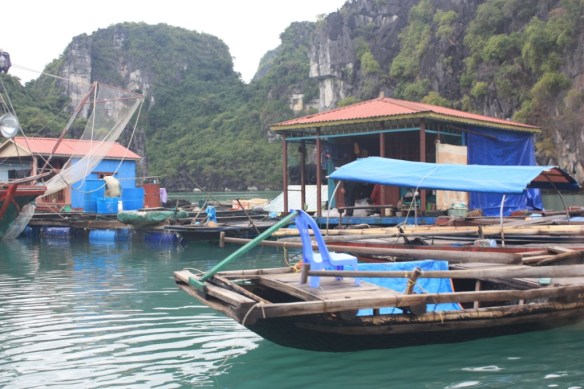
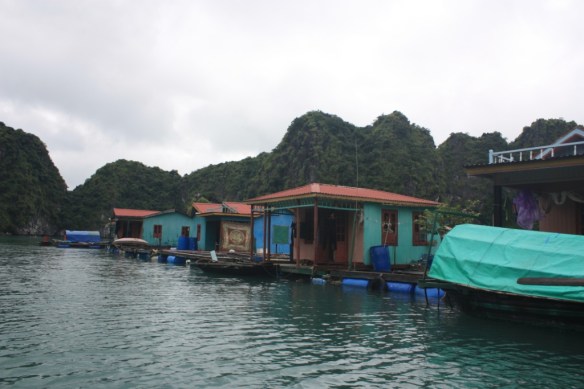

Vung Vieng sits scattered amid a dense cluster of skerries in Vietnam’s Bai Tu Long Bay.
This was the second floating village that my wife and I have visited. The first was located on Lake Titicaca in Peru. The two villages couldn’t be more different.
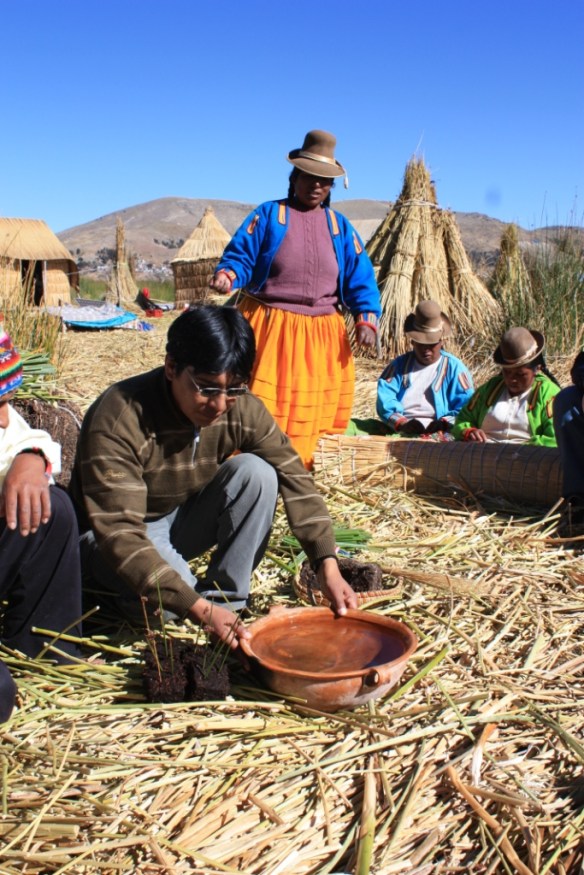
A Peruvian floating island for comparison purposes
There are similarities. Both villages are steadily shrinking (population-wise), and expected to one day disappear. Once upon a time, the villagers lived without daily tourist visits, but now tourists provide much (if not all) of the income earned by most villagers. (In Vietnam, it seemed like fishing might still be a viable income source for some at least. In Peru, it looked like if tourists disappeared tomorrow the islands would be completely abandoned the day after.)
In many ways the villages were different. On Titicaca, the islands and the structures on them are largely made of bundles of a reed that grows in the lake. In Bai Tu Long, the structures are small houses of modern design that are floating on synthetic materials. (They used to float them on polystyrene, or something similar, but that was an ecological wreck because pieces of it broke off to be consumed by the fish while floating ugly upon the sea in perpetuity. Now, the houses are buoyed with empty plastic barrels.)
The original villagers on Lake Titicaca are said to have been Pre-Incan native people who moved out there to evade the bellicose Incans. Part of why a few Peruvians have stayed is that a loophole makes life on the Lake tax-free. The Vietnamese villagers had a more mercantile motive. It was too expensive and time-consuming to go to and from the mainland each day.
Lake Titicaca is a placid high-altitude lake, and that makes it fairly safe for villagers. Bai Tu Long Bay is part of what much of the world calls the South China Sea, but which the Vietnamese call–simply–the Pacific Ocean. (The Vietnamese aren’t big fans of China’s attempts to make this part of ocean their sole domain–including the building of man-made islands. I suspect nothing has been better for building good relations between the governments of the US and Vietnam in the wake of a horrific war than the counterweight the US Navy provides to China’s ambitions.) Obviously, the Vietnamese villagers are subject to some pretty rough weather. The skerries provide protection up to a point, but historically the villagers used to hide out in caves on the islands when it got too tumultuous.
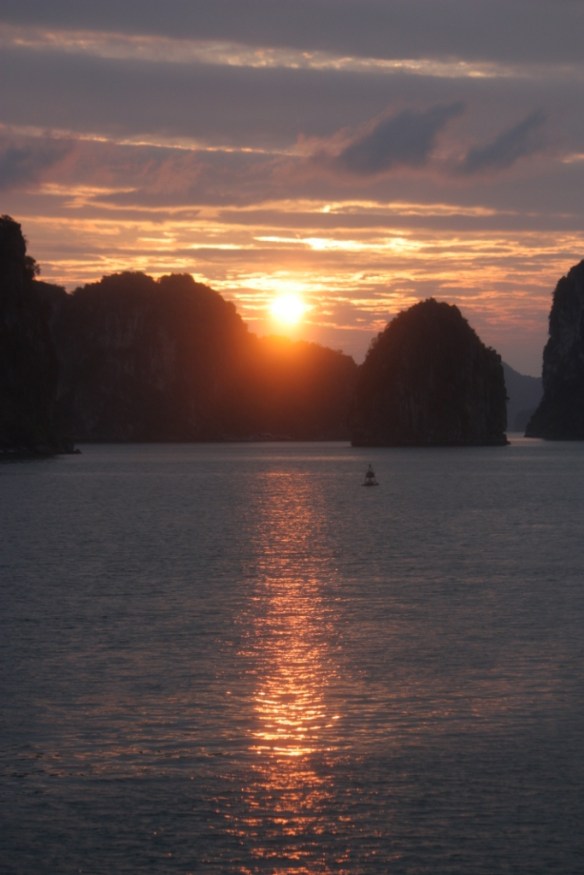
Taken on January 1, 2016 on Bai Tu Long Bay
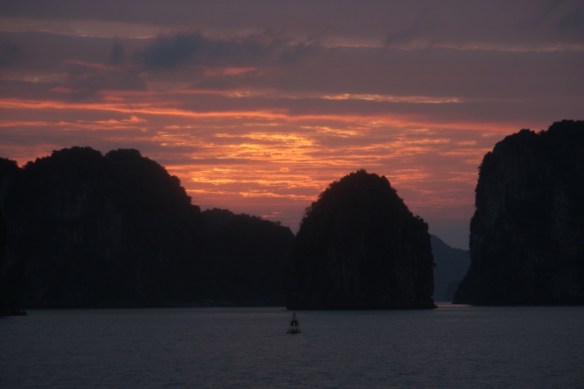
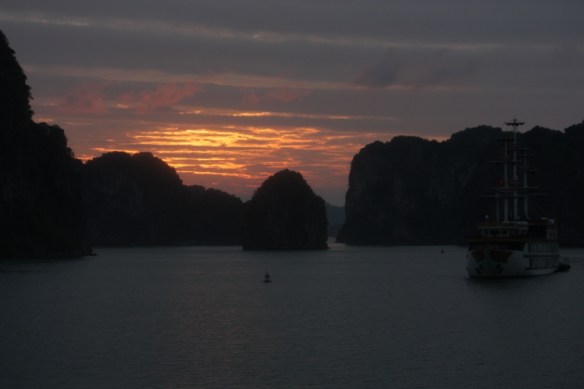
Bai Tu Long Bay is the lesser known–but geographically larger–sibling of Ha Long Bay. It’s name refers to baby dragons, and it derives from the same myth from which Ha Long got its name (i.e. “Descending Dragon.”) Like Ha Long it’s considered a scenic wonder because of the skerries jutting up out of the sea.
We were told that we got a lucky break in getting a clean sunrise during our visit because it’s usually overcast. (Our tour straddled New Years.) It was overcast almost the whole time, but I tend to be skeptical of people selling an experience.


 Tiger Riding for Beginners