
One llama, two llama, dun llama, zoo llama

One llama, two llama, dun llama, zoo llama
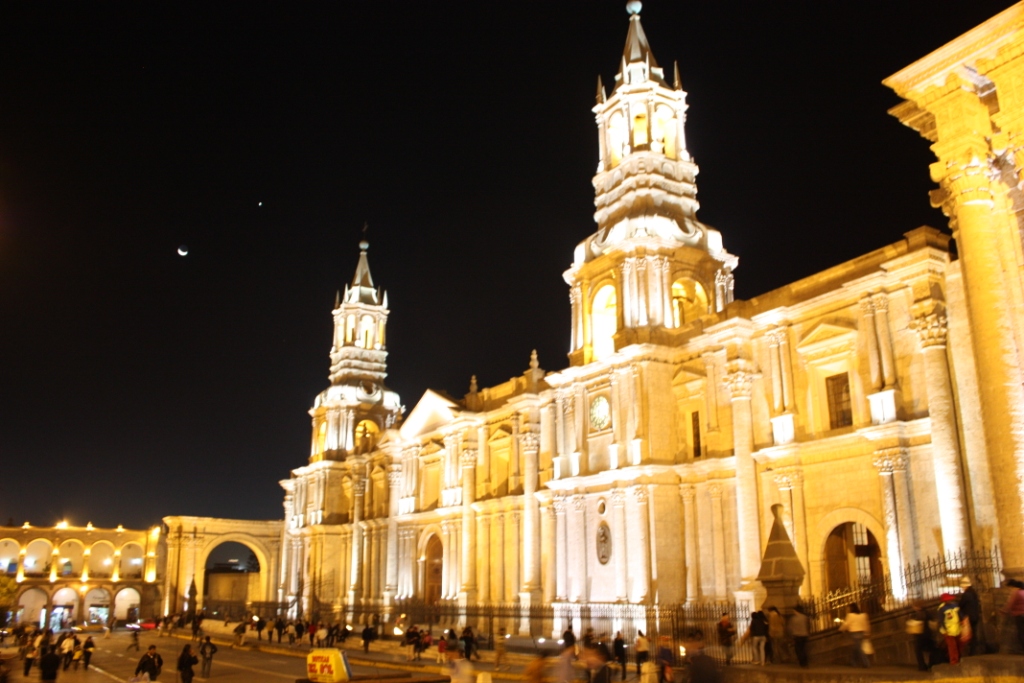
Basilica Cathedral
Arequipa is known as the White City for the appearance of the stone that serves as one of its most conspicuous building materials. Above is the Basilica Cathedral located on Plaza de Armas, which is the city’s main square. Arequipa is a beautiful city, and is the second most populous in Peru. One sees a level of indigenous wealth here that one doesn’t in say Cusco. There is vibrancy to this town.
One of the most impressive local sites is the Convent of Santa Catalina. There are also some impressive views of volcanic mountains that can be seen from the city.
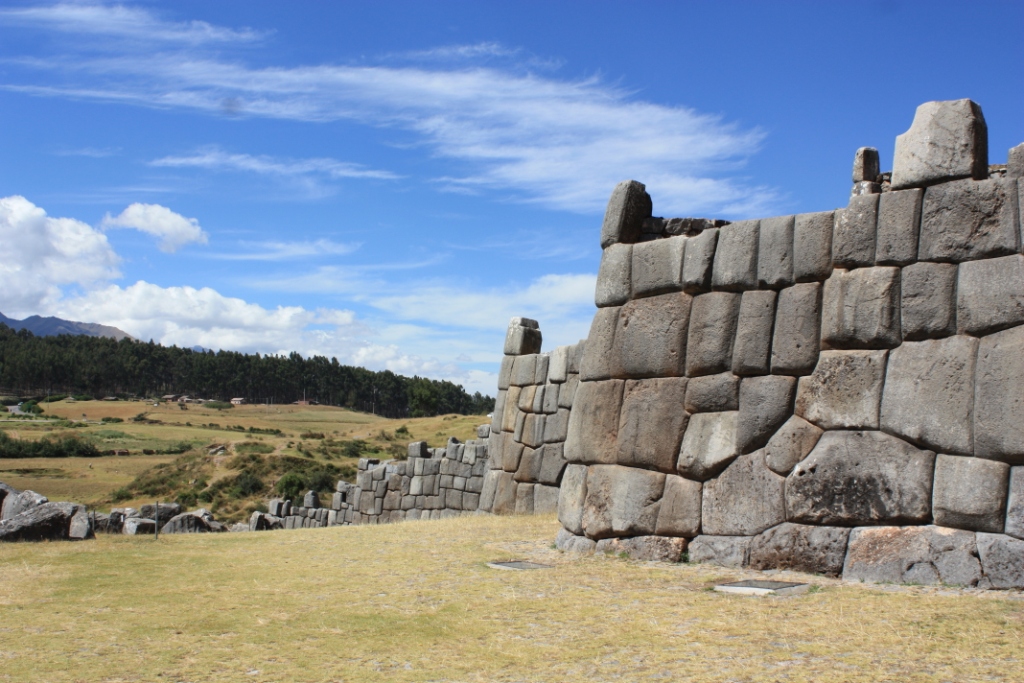
This Incan site overlooks Cusco, Peru.
Sacsayhuamán may well be the first Incan site you see, if you fly into Cusco. It sits on a hill overlooking Cusco. If you’re in the mood to stretch your legs and aren’t too queasy from the elevation (Cusco, 11,200ft), it’s not too difficult a walk from the city center. You can use the Cristo Blanco (huge white Jesus), which shares the same hill, as a navigational reference.
The Incans were the master masons. These stone walls were made without mortar. Yes, those irregularly shaped blocks sit perfectly on each other and have for hundreds of years. The one thing that Sacsayhuamán has that other sites don’t is a naturally occurring fun park of slides. One can also traverse a pitch black cave, and get spectacular overview shots of the city.

Naturally occurring slides
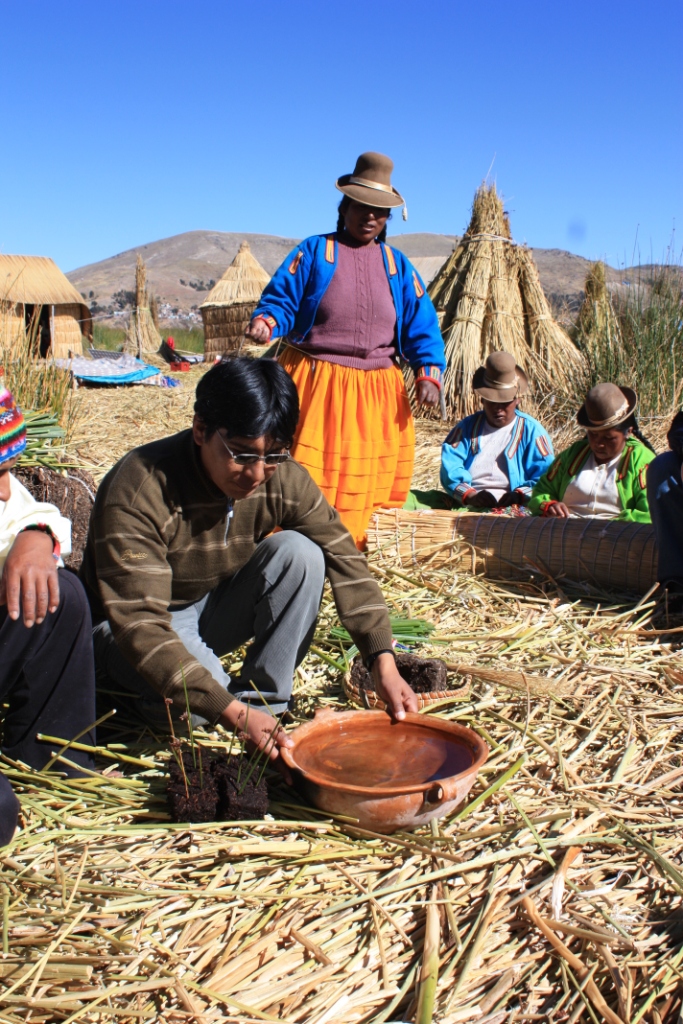
We’re being shown how they made the islands via a scale-model.
The floating islands of Lake Titicaca began as a way for pre-Incan people to avoid subjugation by the Incans. Today they exist for the twin purposes of tourism and tax evasion. The latter is the result of a loophole whereby individuals living on floating islands are not taxed (terra firma island residents are taxed like all others.) Of course, one’s earning potential is quite limited when living on a floating island. I suspect these villages make money from the tour boat operators. They definitely earn money from handicraft sales and “tips” from the tourists — the latter often in exchange for short boat rides on reed boats and photos (either pics of the locals or pics of oneself dressed up in their traditional garb.)
If you can deal with the “ground” squishing under your feet, you should definitely make the ride out to these islands while you’re in the Peruvian Andes. Take a bus to Puno, Peru and from there it’s easy to find a boat at the docks. Make sure to visit Amantani and Tequile islands while you’re at it (these are actual islands.)


